
Spirometry Test Singapore: What It Measures, Who Needs It, and What to Expect
✍️ Written by: HOP Medical Centre Health Content Team
📅 Published: September 2026 | 🔄 Last Reviewed: September 2026
A spirometry test Singapore adults select through HOP Medical Centre’s executive health screening program measures lung function through a single forced breath — producing objective data about airway health that no physical examination or symptom assessment alone can provide. At HOP Medical Centre, spirometry is available as a selectable clinical test across all four executive health screening package tiers. Consequently, any patient attending a health screening at HOP Medical Centre can include spirometry in their appointment by selecting it from their package’s clinical test menu.
Lung disease in Singapore is significantly more common than most people expect. Chronic Obstructive Pulmonary Disease (COPD) affects an estimated 3 to 5% of Singapore’s adult population. Furthermore, COPD is consistently underdiagnosed — the majority of affected adults have never received a formal diagnosis. The reason is straightforward. COPD develops silently over years. Its early symptoms — mild breathlessness, a morning cough, reduced exercise tolerance — are dismissed as normal ageing, low fitness, or the lingering effects of air conditioning. Spirometry identifies the underlying airway obstruction that produces these symptoms. It does this before the condition has progressed to the stage where it limits daily activity significantly.
This article covers what a spirometry test measures, what the results mean clinically, who benefits most from including spirometry in their annual health screening, and how to add it to a HOP Medical Centre health screening appointment.
View HOP Health Screening PackagesWhat Is a Spirometry Test Singapore and What Does It Measure?
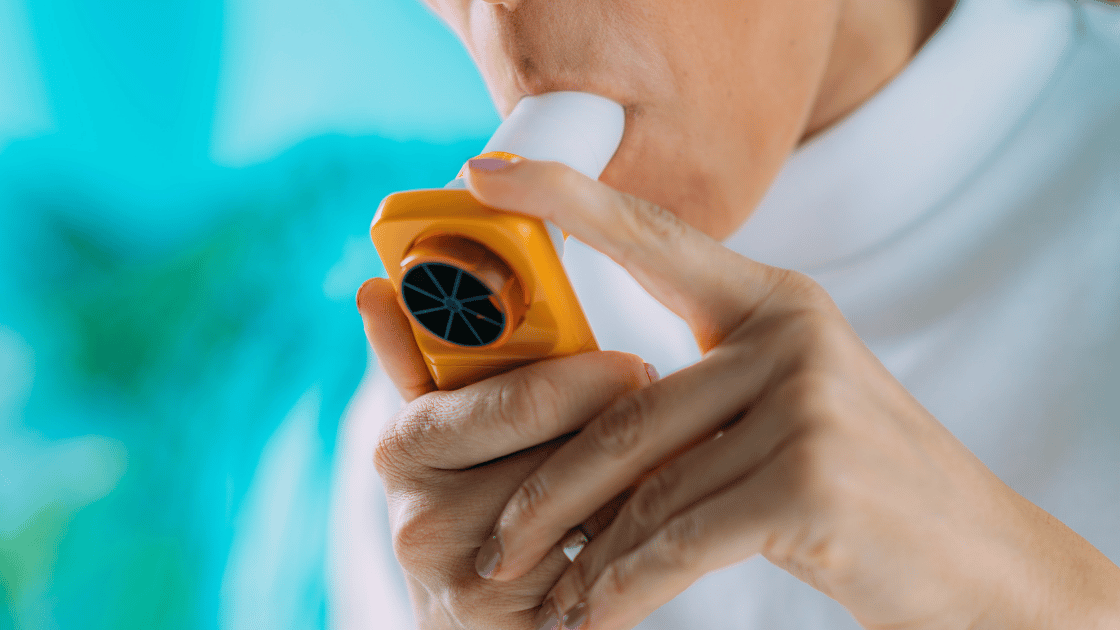
A spirometry test Singapore measures how much air a person can exhale in a single forced breath and how fast that air flows out. The test is non-invasive. It involves breathing into a handheld mouthpiece connected to a spirometer device. The patient inhales fully, then exhales as forcefully and completely as possible. The device records the result. The full test takes only a few minutes to complete.
Two measurements form the foundation of every spirometry result. The first is FVC — Forced Vital Capacity. This measures the total volume of air a patient can exhale in one maximal effort. The second is FEV1 — Forced Expiratory Volume in one second. This measures how much of that total volume the patient exhales in the first second. Additionally, the ratio of FEV1 to FVC provides the single most clinically important spirometry finding — indicating whether airflow obstruction is present and how severe it is.
What the FEV1/FVC Ratio Reveals About Lung Health
In a healthy lung, a person exhales approximately 70 to 80% of their total lung capacity within the first second of forced exhalation. The FEV1/FVC ratio therefore sits above 0.70 in adults with normal airway function. A ratio below 0.70 indicates airflow obstruction — meaning the airways are narrowed, partially blocked, or structurally damaged in a way that slows airflow. This is the hallmark finding of obstructive lung disease.
Furthermore, spirometry distinguishes between obstructive and restrictive lung disease patterns. Obstructive patterns — where FEV1/FVC falls below 0.70 — characterise COPD and asthma. Restrictive patterns — where total lung volume is reduced but the ratio remains normal — characterise conditions such as pulmonary fibrosis and occupational lung disease. In short, the specific pattern of spirometry results directs the clinical investigation toward the correct diagnosis rather than leaving the physician guessing based on symptoms alone.
Who Should Include a Spirometry Test Singapore in Their Health Screening?
Spirometry delivers the most clinical value for specific patient groups. Understanding which groups benefit most helps patients make an informed decision about selecting it within their health screening package.
| Risk Group | Why Spirometry Matters | What It May Find |
|---|---|---|
| Current or former smokers | Cigarette smoke is the primary cause of COPD; damage accumulates silently for years before symptoms appear | Early-stage COPD with airflow obstruction — often before the patient notices significant breathlessness |
| Adults with persistent cough | Chronic cough lasting more than 8 weeks is a symptom of airway inflammation and airflow obstruction | Undiagnosed asthma, early COPD, or other obstructive airway disease driving the symptom |
| Adults with unexplained breathlessness | Breathlessness on exertion that feels disproportionate to activity level is a cardinal COPD symptom | Reduced FEV1 and FVC explaining the symptom — often previously attributed to low fitness or ageing |
| Adults with known asthma | Spirometry measures the degree of airway obstruction and whether treatment is achieving adequate control | Current airway obstruction severity and response to bronchodilator treatment — guiding medication adjustment |
| Workers with occupational dust or chemical exposure | Construction, manufacturing, food processing, and healthcare workers face occupational lung disease risk | Restrictive or obstructive patterns from occupational lung damage — identifying risk before symptoms become disabling |
| Adults over 40 with no prior spirometry | COPD prevalence rises sharply from age 40; a baseline spirometry establishes lung function for future comparison | Asymptomatic airflow obstruction — more common in this age group than most adults assume |
Spirometry and COPD: Singapore’s Most Underdiagnosed Lung Condition
COPD is Singapore’s most prevalent and most underdiagnosed chronic lung condition. Unlike asthma — which causes episodic, reversible airway narrowing — COPD causes progressive, largely irreversible airway damage. The damage accumulates over years of smoking or other airway injury. Moreover, by the time most patients seek medical attention for COPD, they have already lost 30 to 40% of their lung function. The intervening years of silent progression represent a missed clinical window. Spirometry is the tool that opens that window.
Notably, spirometry can identify COPD at the stage where the patient has mild breathlessness on exertion but still considers themselves well. At this stage, smoking cessation produces the most significant impact on disease progression. Inhaled bronchodilator treatment improves daily symptom burden. These interventions produce meaningful quality of life benefit — but only when the condition has been identified through testing.
Spirometry and Asthma: Monitoring Beyond Symptoms
Adults with known asthma benefit from spirometry testing even when their asthma feels well-controlled. Symptom perception is an unreliable guide to asthma control. Many patients describe their breathing as “fine” while their spirometry shows clinically significant airway obstruction. Conversely, some patients with normal spirometry results report significant breathlessness from causes other than airway obstruction — anxiety, deconditioning, or cardiac disease among them.
Spirometry provides objective airway function data that neither the patient’s symptom report nor the physician’s physical examination can replace. Additionally, bronchodilator reversibility testing — where spirometry is performed before and after a bronchodilator inhaler — distinguishes asthma from COPD by assessing whether airway obstruction reverses with treatment. This distinction carries significant clinical implications for long-term medication selection.
What to Expect During a Spirometry Test at HOP Medical Centre
The spirometry test at HOP Medical Centre is brief and non-invasive. No needles, blood draws, or imaging are involved. The test requires only breathing effort from the patient.
Preparation. If you use inhalers, call HOP Medical Centre one day before your appointment. The clinical team advises whether inhaler use should pause before testing, as bronchodilators can affect spirometry measurements. Do not smoke for at least one hour before the test. No fasting is required for spirometry specifically.
The test itself. The patient breathes through a disposable mouthpiece. A nose clip ensures all airflow passes through the mouthpiece. The clinical technician coaches the patient through several maximal forced exhalations — instructing them to inhale fully, then exhale as hard and as completely as possible.
Spirometry Results: When the Physician Reviews Them
The spirometer produces readings immediately at the time of testing. The physician reviews the FVC, FEV1, and FEV1/FVC ratio values at the post-screening consultation — which takes place at the end of the same health screening appointment. In this way, patients receive personalised guidance on their lung function result on the same day. The full written health screening report, including all laboratory and clinical test results, arrives within a few working days.
The physician interprets spirometry findings against predicted normal values for the patient’s age, height, sex, and ethnicity. Furthermore, spirometry results are reviewed alongside any respiratory history, symptom profile, and other relevant findings from the appointment — producing an integrated clinical picture rather than an isolated number.
How to Select Spirometry in Your HOP Medical Centre Health Screening Package
🫁 Spirometry at HOP Medical Centre — Key Facts
🔹 Premium Economy ($499.22): Choose 1 clinical test — spirometry is one of 7 options including ECG, Tonometry, Bone Mineral Densitometry, Chest X-ray, Digital Retinal Imaging, and Brain Health Assessment
🔹 Business Class ($717.22): Choose 2 clinical tests from the same menu of 7
🔹 First Class ($1,177.20): Choose 4 clinical tests from the same menu of 7
🔹 Suites Class ($1,722.20): Choose 5 clinical tests from the same menu of 7
🔹 Inhaler preparation: Call HOP Medical Centre one day before your appointment if you use inhalers — the clinical team advises whether to withhold your inhaler before the test
🔹 No smoking 1 hour before: Smoking affects airway function and alters spirometry results
🔹 Results: Reviewed by the physician at the post-screening consultation on the same day — full written report follows within a few working days
The Ministry of Health Singapore recognises COPD and chronic airway disease as significant contributors to Singapore’s adult disease burden — supporting early identification through objective lung function assessment. The Health Promotion Board Singapore additionally highlights smoking cessation as the single most impactful intervention for preventing and slowing COPD progression — reinforcing the clinical value of spirometry in identifying airflow obstruction that motivates this behaviour change.
Book Your Health Screening at HOP Medical CentreFrequently Asked Questions: Spirometry Test Singapore
What does a spirometry test Singapore measure?
A spirometry test Singapore measures two key lung function values. FVC — Forced Vital Capacity — measures the total volume of air a patient can exhale in one maximal effort. FEV1 — Forced Expiratory Volume in one second — measures how much of that total volume the patient exhales in the first second. The ratio of FEV1 to FVC is the single most clinically important spirometry finding. A ratio below 0.70 indicates airflow obstruction — the hallmark of COPD and other obstructive lung conditions. The spirometer produces readings immediately at the time of testing, and the physician reviews the result at the post-screening consultation on the same day.
Who should get a spirometry test in Singapore?
Adults who benefit most from spirometry include current or former smokers, adults with a persistent cough lasting more than eight weeks, adults with unexplained breathlessness on exertion, adults with known asthma who want objective airway function measurement, workers with occupational dust or chemical exposure, and adults over 40 who have never had a baseline lung function assessment. Furthermore, anyone who suspects their breathing is not as good as it should be — but has no formal diagnosis — benefits from spirometry as an objective assessment that symptoms and physical examination cannot replace.
How do I prepare for a spirometry test at HOP Medical Centre?
If you use inhalers, call HOP Medical Centre one day before your appointment. The clinical team advises whether to withhold your inhaler before the test, as bronchodilators affect spirometry measurements. Do not smoke for at least one hour before the test. No fasting is required for spirometry. Please be in comfortable attire as advised for all health screening appointments.
Is a spirometry test the same as a chest X-ray?
No — spirometry and chest X-ray measure different aspects of lung health. Spirometry measures airflow and lung function — identifying obstruction, reduced lung capacity, and airway disease. A chest X-ray produces a structural image of the lungs — identifying infections, masses, fluid, and structural abnormalities. Neither test replaces the other. Both are selectable clinical test options within HOP Medical Centre’s health screening packages — a patient selecting both spirometry and chest X-ray in the same appointment receives a more complete respiratory health picture than either provides alone.
Can spirometry detect lung cancer?
Spirometry does not detect lung cancer. It measures airflow and lung function — identifying obstructive and restrictive airway patterns. Lung cancer detection requires imaging. However, spirometry can identify chronic airway disease from smoking that independently elevates lung cancer risk. Consequently, an abnormal spirometry result in a current or former smoker may prompt further investigation as part of a comprehensive respiratory health assessment.
More Questions About Spirometry in Singapore
How often should I get a spirometry test in Singapore?
For adults with no known respiratory conditions, a baseline spirometry test from age 40 onwards — or earlier for smokers and those with occupational exposure — establishes a lung function reference point for future comparison. For adults with known COPD or asthma, the clinical team recommends spirometry frequency based on condition severity and monitoring needs. Notably, a single spirometry result provides less clinical information than a trend over time — making regular testing more valuable than a one-off assessment for adults with identified airway disease.
What happens if my spirometry test shows abnormal results?
The physician reviews spirometry findings at the post-screening consultation on the same day as the appointment. The clinical response depends on the pattern and severity of the abnormality, the patient’s symptom history, and their smoking and occupational history. Mild obstruction in a current smoker prompts cessation discussion and a follow-up spirometry plan. More significant obstruction may prompt referral to a respiratory physician for further assessment and treatment planning.
Does spirometry testing hurt?
No — spirometry is entirely non-invasive and pain-free. The test requires maximal breathing effort, which some patients find briefly tiring — particularly those with significantly reduced lung function. Patients who feel lightheaded during forced exhalation should inform the clinical team, who can allow rest time between attempts. The brief effort required is the only discomfort the test produces for most patients.
What is the difference between spirometry and peak flow testing?
Both tests measure lung function through breathing effort. Spirometry is the more comprehensive assessment — measuring FVC, FEV1, FEV1/FVC ratio, and additional flow-volume parameters that provide a detailed airway function picture. Peak flow testing measures only the peak speed of exhalation — a single value commonly used for home asthma monitoring. Spirometry is more diagnostically informative and is the standard assessment for COPD diagnosis, asthma severity grading, and pre-employment occupational lung screening.
The Breath That Tells the Clinical Story
A spirometry test Singapore adults add to their HOP Medical Centre health screening takes only a few minutes. The data it produces — FVC, FEV1, the FEV1/FVC ratio — objectively characterises the state of airway function that no physical examination, symptom report, or chest X-ray can capture. For the significant proportion of Singapore’s adult population carrying undiagnosed COPD, or managing asthma with inadequate control, that result provides the clinical finding that changes the management plan.
At HOP Medical Centre, spirometry is available as a selectable clinical test in all four executive health screening package tiers — Premium Economy through to Suites Class. Select it at the time of booking. If you use inhalers, call the clinic one day before. Do not smoke within one hour of your appointment. Arrive ready to breathe.
Book your health screening with spirometry at HOP Medical Centre and get the lung function result that tells you what your breathing is actually doing.