
Glaucoma Screening Singapore: What Tonometry Tests, Who Needs It, and What to Expect
✍️ Written by: HOP Medical Centre Health Content Team
📅 Published: October 2026 | 🔄 Last Reviewed: October 2026
Glaucoma screening Singapore adults select through HOP Medical Centre uses tonometry — a quick, non-invasive measurement of intraocular pressure — to identify one of the most clinically important and most consistently overlooked risk factors in eye health. At HOP Medical Centre, tonometry is available as a selectable clinical test across all four executive health screening package tiers. Consequently, any patient attending a health screening at HOP Medical Centre can include glaucoma screening in their appointment by selecting tonometry from their package’s clinical test menu.
Why Glaucoma Screening Singapore Matters for Every Adult Over 40
Glaucoma is the leading cause of irreversible blindness worldwide. In Singapore, it affects an estimated 3% of adults over 40 — and the proportion rises sharply with age. The most common form — primary open-angle glaucoma — produces no symptoms in its early and moderate stages. Pain does not signal the problem. Blurred vision does not appear as a warning. The optic nerve sustains progressive damage without any perceivable symptom whatsoever. By the time most patients notice visual changes, irreversible peripheral vision loss has already occurred. Tonometry identifies elevated intraocular pressure — the primary measurable risk factor for glaucoma — at the stage where intervention prevents this irreversible damage rather than managing its aftermath.
This article covers what tonometry measures, what glaucoma is, who is most at risk in Singapore, what the test involves at HOP Medical Centre, and how to include it in an annual health screening appointment.
Book Your Glaucoma Screening at HOP Medical CentreWhat Is Tonometry and What Does It Measure?
Tonometry is the clinical measurement of intraocular pressure — the fluid pressure inside the eye. The eye maintains a constant internal pressure through the production and drainage of aqueous humour, the clear fluid that fills the front portion of the eye. When this drainage system functions normally, pressure remains within the healthy range. When drainage becomes impaired — as it does in glaucoma — pressure builds inside the eye. Consequently, this elevated pressure gradually damages the optic nerve, reducing peripheral vision progressively and, without intervention, leading to blindness.
Tonometry measures this pressure directly and objectively. It produces a numerical reading in millimetres of mercury (mmHg). The normal range sits between 10 and 21 mmHg in most adults. A reading above 21 mmHg — a condition called ocular hypertension — warrants clinical review and monitoring. Notably, not every person with elevated intraocular pressure develops glaucoma, and some people develop glaucoma with normal pressure readings. However, elevated intraocular pressure remains the single most important modifiable risk factor for glaucoma — and tonometry is the tool that identifies it.
Why Glaucoma Is Called the Silent Thief of Sight
The clinical challenge with glaucoma is precisely what makes tonometry so important. Primary open-angle glaucoma — the most common form — damages peripheral vision first. Peripheral vision is used for detecting motion and navigating the environment outside the direct line of sight. Most people do not notice peripheral vision loss until it is significant. Furthermore, the brain adapts to gradual visual field reduction by compensating with central vision. This adaptation effectively masks the loss until it becomes severe.
Moreover, glaucoma damage is irreversible. Unlike many eye conditions that respond fully to treatment, optic nerve damage from glaucoma cannot be repaired. Treatment — whether eye drops, laser therapy, or surgery — halts or slows further damage. It does not, however, restore what was already lost. Consequently, the clinical value of glaucoma screening lies entirely in early identification. Finding elevated intraocular pressure before optic nerve damage begins is the only window where intervention fully protects vision.
Who Is Most at Risk of Glaucoma in Singapore?
Several risk factors significantly increase the likelihood of developing glaucoma. Understanding which groups carry the highest risk helps patients make an informed decision about including tonometry in their health screening package selection.
| Risk Factor | Why It Increases Risk | Clinical Implication |
|---|---|---|
| Age over 40 | Glaucoma prevalence rises sharply from age 40 — affecting approximately 3% of adults over 40 in Singapore | Annual tonometry from age 40 establishes a pressure baseline for early trend detection |
| Family history of glaucoma | First-degree relatives of glaucoma patients carry 4 to 9 times higher risk — the strongest single risk factor | Screening should begin earlier — from age 35 — and continue annually regardless of pressure readings |
| Asian ethnicity | Asian populations carry significantly higher risk of angle-closure glaucoma — a faster-progressing form — than European populations | Angle-closure risk makes tonometry particularly clinically important for Singapore’s adult population |
| High myopia | High myopia — typically above -6 dioptres — is associated with optic nerve changes that increase glaucoma susceptibility | Highly myopic adults benefit from tonometry as part of annual screening regardless of age |
| Elevated blood pressure or diabetes | Both conditions are associated with microvascular changes that increase optic nerve vulnerability to pressure damage | Adults managing cardiovascular or metabolic conditions benefit from annual eye pressure monitoring |
| Long-term corticosteroid use | Prolonged use of corticosteroid eye drops, inhaled steroids, or oral steroids can elevate intraocular pressure | Adults on long-term steroid therapy need regular tonometry monitoring as part of medication management |
What the Tonometry Test Involves at HOP Medical Centre
The tonometry test at HOP Medical Centre is brief, non-invasive, and fits naturally within the broader health screening appointment. No injections or blood draws are involved.
Preparation. Patients should bring their eye glasses to the appointment if they wear them. Contact lens wearers must additionally remove their lenses at least 30 minutes before the tonometry test. This step matters clinically — contact lenses affect the corneal surface and can produce inaccurate pressure readings if still in place during the test. As a result, patients who wear contact lenses daily should plan their appointment timing accordingly.
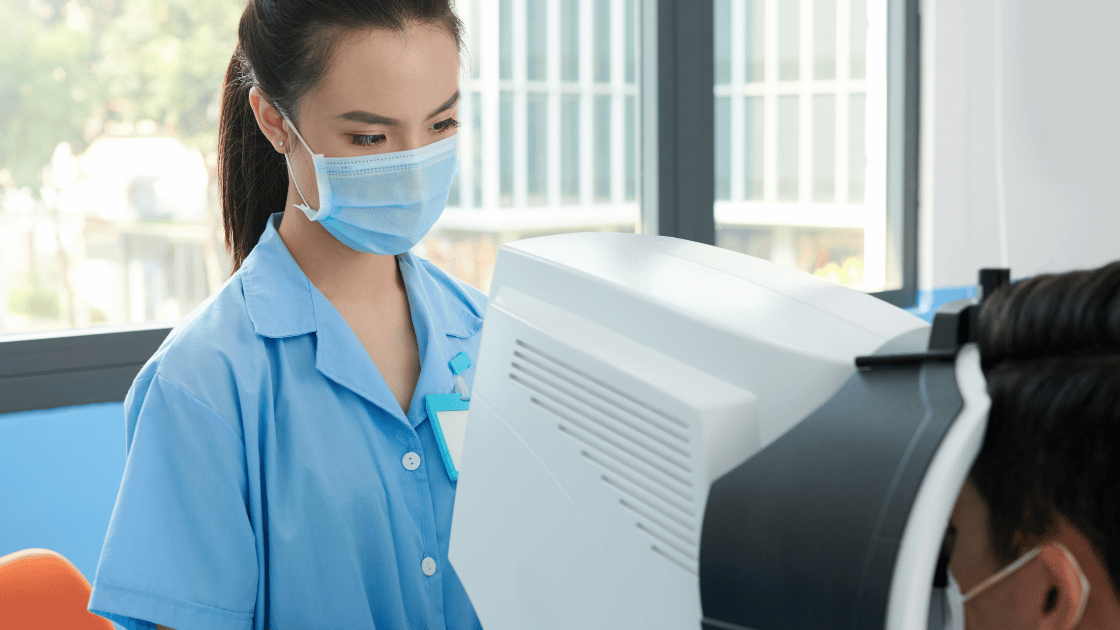
The test itself. A tonometer device measures intraocular pressure directly. Each eye takes only a few seconds to assess. Patients typically describe the sensation as brief and mild — seated comfortably throughout, with no special positioning or effort required beyond keeping still during the measurement.
How Tonometry Results Are Reviewed at HOP Medical Centre
A pressure reading is produced immediately at the time of testing. The physician reviews the intraocular pressure result at the post-screening consultation — which takes place at the end of the same health screening appointment. Patients therefore receive their result and clinical interpretation on the same day.
👁️ Understanding Your Tonometry Result
🟢 10–21 mmHg: Normal intraocular pressure range for most adults. No immediate clinical concern — annual monitoring is recommended for those with risk factors.
🟡 22–30 mmHg: Ocular hypertension — elevated pressure warrants clinical review. The physician discusses monitoring frequency and whether further specialist assessment is appropriate.
🔴 Above 30 mmHg: Significantly elevated pressure — specialist referral is typically indicated for comprehensive glaucoma assessment including visual field testing and optic nerve imaging.
⚠️ Normal pressure with glaucoma risk factors: A normal single reading does not rule out glaucoma risk entirely — the physician reviews the result alongside family history, age, and other risk factors to advise on appropriate monitoring frequency.
The physician at HOP Medical Centre interprets the tonometry result alongside the patient’s full health profile — including cardiovascular or metabolic findings from the blood panel, any reported eye symptoms, and family history. In this way, the result becomes a clinically personalised finding rather than a number presented without context. The full written health screening report subsequently arrives within a few working days.
How to Select Tonometry in Your HOP Medical Centre Health Screening Package
Tonometry is one of seven selectable clinical tests across all four HOP Medical Centre executive health screening package tiers. Specifically, the other selectable tests are Resting ECG, Bone Mineral Densitometry, Chest X-ray, Spirometry, Digital Retinal Imaging, and Brain Health Assessment. Premium Economy allows one selection, Business Class allows two, First Class allows four, and Suites Class allows five. Patients who want both eye-specific tests — tonometry and digital retinal imaging — can select both in the Business Class, First Class, or Suites Class tiers.
Where to Book and What to Expect on Arrival
HOP Medical Centre’s glaucoma screening Singapore appointments are available at two locations. The Orchard clinic sits at Palais Renaissance, 390 Orchard Road. Alternatively, the Tampines clinic is at CPF Building, 1 Tampines Central 5. Both are accessible by MRT and serve patients from across Singapore.
Weekday appointments run from 8:30am to 11:30am and 1:30pm to 4:30pm. Saturday slots are available from 8:30am to 11:30am. Tonometry is completed within the broader health screening appointment — no separate visit or additional slot is therefore required.
The Ministry of Health Singapore recognises glaucoma as a significant cause of preventable blindness in Singapore — supporting proactive intraocular pressure monitoring as part of comprehensive preventive health care. The Health Promotion Board Singapore additionally recommends regular eye health assessments for adults over 40, particularly those with a family history of glaucoma or other identified risk factors.
Book Your Glaucoma Screening at HOP Medical CentreFrequently Asked Questions: Glaucoma Screening Singapore
What is tonometry and how does it relate to glaucoma screening Singapore?
Tonometry is the clinical measurement of intraocular pressure — the fluid pressure inside the eye. Elevated intraocular pressure is the primary measurable risk factor for glaucoma, the leading cause of irreversible blindness worldwide. Glaucoma screening Singapore through tonometry at HOP Medical Centre checks this pressure quickly and non-invasively. A pressure reading above 21 mmHg consequently warrants clinical review. Moreover, the physician reviews the result at the post-screening consultation on the same day as the appointment.
Who should include tonometry in their health screening in Singapore?
Adults who benefit most include those over 40, adults with a first-degree family member with glaucoma, adults of Asian ethnicity — who carry higher risk of angle-closure glaucoma — adults with high myopia, adults managing elevated blood pressure or diabetes, and adults on long-term corticosteroid therapy. Furthermore, any adult who has never had intraocular pressure measured benefits from a baseline reading for future comparison.
How do I prepare for a tonometry test at HOP Medical Centre?
Bring your eye glasses to the appointment if you wear them. Additionally, contact lens wearers should remove their lenses at least 30 minutes before the test — contact lenses affect the corneal surface and can produce inaccurate pressure readings if still in place. No fasting or eye drops are required. In general, please be in comfortable attire as advised for all health screening appointments.
What Tonometry Results Tell You — and What They Don’t
Does tonometry hurt?
No — tonometry at HOP Medical Centre is non-invasive and brief. Patients are seated comfortably throughout. Each eye takes only a few seconds to assess. Most patients consequently describe it as one of the most comfortable components of their health screening appointment.
Can tonometry diagnose glaucoma?
Tonometry measures intraocular pressure — it identifies elevated pressure that warrants further investigation, not glaucoma itself. A confirmed glaucoma diagnosis requires comprehensive ophthalmological assessment including visual field testing and optic nerve imaging. However, tonometry is the standard first-line screening tool that identifies which adults need this further investigation. As a result, it is the most clinically practical glaucoma screening test available within an annual health screening appointment.
More Questions About Glaucoma Screening in Singapore
How often should I have my eye pressure checked in Singapore?
For adults over 40 with no identified risk factors, tonometry every one to two years provides adequate surveillance. Adults with a family history of glaucoma, high myopia, Asian ethnicity with angle-closure risk, or other identified risk factors benefit, in particular, from annual tonometry. For adults with confirmed ocular hypertension, the specialist recommends monitoring frequency based on the pressure level and overall glaucoma risk profile.
What happens if my tonometry result shows elevated eye pressure?
An elevated intraocular pressure reading is discussed with the patient at the post-screening physician consultation on the same day. Mildly elevated pressure — between 22 and 30 mmHg — typically warrants specialist referral for comprehensive glaucoma assessment. Significantly elevated pressure above 30 mmHg, by contrast, typically requires prompt specialist review. In both cases, the physician contextualises the number and advises on the appropriate next step for each patient’s specific situation.
Is glaucoma treatable if detected early?
Yes — and this is the entire clinical case for glaucoma screening. When elevated intraocular pressure is identified before optic nerve damage begins, treatment successfully prevents vision loss in the vast majority of patients. Prescription eye drops lower intraocular pressure effectively in most cases. Laser treatment and surgical options are additionally available when drops alone are insufficient. Notably, once optic nerve damage has occurred, treatment halts further progression but cannot restore lost vision — making early detection through regular tonometry one of the highest-value preventive health actions available to adults in Singapore.
Can I have both tonometry and digital retinal imaging at HOP Medical Centre in the same appointment?
Yes — both are selectable clinical tests within HOP Medical Centre’s executive health screening package menu. Business Class, First Class, and Suites Class tiers allow two or more clinical test selections. Consequently, patients who want both eye-specific tests can select tonometry and digital retinal imaging together in the same appointment — covering intraocular pressure assessment for glaucoma risk and retinal health assessment together.
Find Elevated Eye Pressure Before It Finds Your Vision
Glaucoma screening Singapore through tonometry at HOP Medical Centre takes only a few seconds per eye. Results are, moreover, reviewed by the physician at the same-day post-screening consultation. Preparation requires only removing contact lenses 30 minutes before the test and bringing eye glasses if worn. For a condition that blinds without warning, that is a very small clinical investment — and consequently the only one that works before irreversible damage begins.
At HOP Medical Centre, tonometry is selectable in all four executive health screening package tiers — Premium Economy through to Suites Class. Select it at the time of booking. Remove contact lenses 30 minutes before your appointment. Bring your glasses if you wear them.
Book your glaucoma screening at HOP Medical Centre and know your intraocular pressure before it becomes a clinical emergency.