
Urine Test Singapore: What It Checks, What Abnormal Results Mean, and What to Do Next
✍️ Written by: HOP Medical Centre Health Content Team
📅 Published: June 2026 | 🔄 Last Reviewed: June 2026
A urine test in Singapore is included in virtually every health screening package. Yet it is the result that most patients pay the least attention to. At HOP Medical Centre, patients frequently focus on cholesterol numbers and blood glucose results. They barely glance at the urine analysis section of their report. This is understandable — but it means one of the most clinically informative components of a standard health screen goes unexamined.
A urine test — more formally called urinalysis or urine analysis — screens for a broad range of conditions from a single, non-invasive sample. Consequently, it delivers clinical information about kidney function, diabetes risk, urinary tract infections, and liver health. Blood tests alone do not always capture these findings. Understanding what each marker means helps patients engage meaningfully with their results — rather than simply accepting a pass or fail without context.
This guide explains what a urine test in Singapore checks for, what each marker indicates, what abnormal results mean, and when a finding requires follow-up action.
View Our Health Screening PackagesWhat Is a Urine Test and How Does It Work?
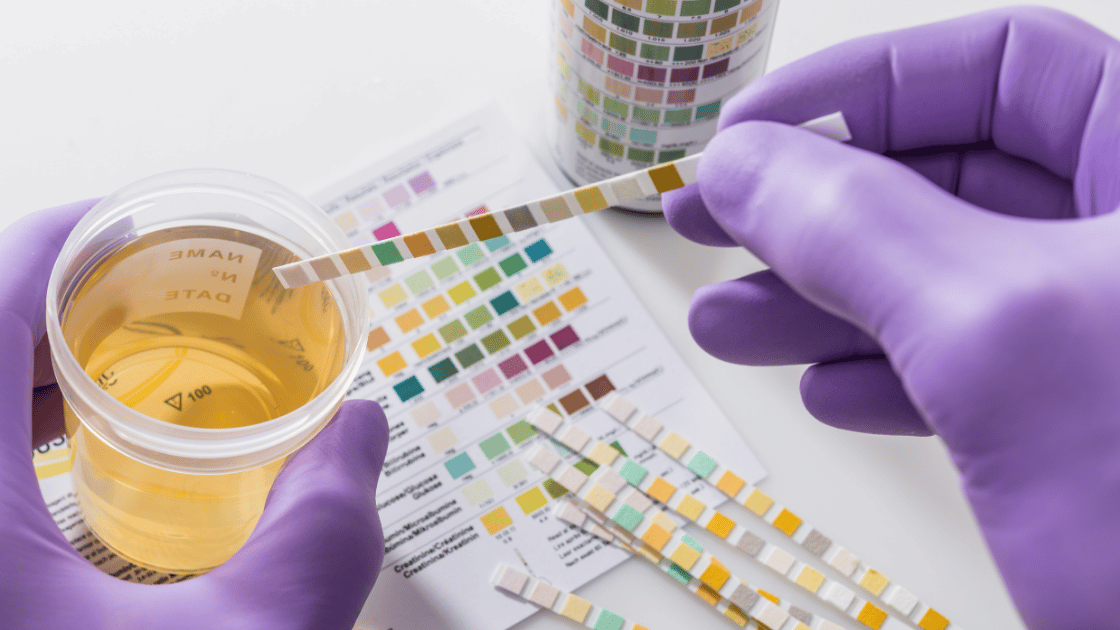
A urinalysis examines a urine sample in three ways. First, a visual assessment evaluates colour, clarity, and concentration. Second, a dipstick test checks for specific substances such as protein, glucose, blood, and ketones. A chemically treated strip dipped into the sample produces rapid results. Third, microscopic examination identifies cells, crystals, and particles not visible to the naked eye.
Together, these three layers provide a multi-dimensional clinical picture. Furthermore, urine contains filtration products from across the body. Consequently, abnormalities in urine can reflect problems originating well beyond the kidneys themselves.
The test requires a fresh urine sample — ideally the first morning void. This is more concentrated and therefore more clinically informative. At HOP Medical Centre, urine collection forms part of every standard health screening appointment.
The Ministry of Health Singapore includes urine analysis as a standard component of recommended health screening protocols — reinforcing its clinical value as a routine, non-invasive diagnostic tool.
What Does a Urine Test Check For in Singapore?
| Marker | What It Indicates | Possible Cause of Abnormal Result |
|---|---|---|
| Protein (Proteinuria) | Kidney filtration function | Kidney disease, hypertension-related kidney damage, intense exercise, dehydration |
| Glucose (Glycosuria) | Blood sugar regulation | Diabetes or prediabetes — glucose appears in urine when blood glucose exceeds the kidney’s reabsorption threshold |
| Blood (Haematuria) | Urinary tract integrity | Kidney stones, urinary tract infection, bladder conditions, or rarely kidney or bladder cancer |
| Leukocytes (White Blood Cells) | Infection or inflammation in the urinary tract | Urinary tract infection, kidney infection, or non-infectious inflammation |
| Nitrites | Bacterial presence in the urinary tract | Bacterial urinary tract infection — nitrites are produced by bacteria breaking down urinary compounds |
| Ketones | Fat metabolism — indicator of dietary or metabolic state | Very low carbohydrate diet, prolonged fasting, uncontrolled diabetes, or eating disorders |
| Bilirubin and Urobilinogen | Liver and bile duct function | Liver disease, hepatitis, gallstones, or haemolytic conditions |
| Specific Gravity | Urine concentration — reflects the kidney’s ability to concentrate urine | Dehydration (high), diabetes insipidus or kidney disease (low) |
| pH | Urine acidity — reflects metabolic and dietary patterns | Highly acidic urine links to high protein diet or kidney stones; alkaline urine may indicate UTI or kidney tubular issues |
Protein in Urine: What Proteinuria Means
Protein in the urine — proteinuria — is one of the most clinically significant findings in a routine urine test. Healthy kidneys filter waste products from blood while retaining proteins. When protein leaks into urine, it signals that kidney filtration is not working efficiently.
Persistent proteinuria is an early warning sign of chronic kidney disease. It often appears years before kidney function deteriorates enough to show in blood creatinine levels. Detecting it during routine health screening therefore creates a valuable early warning that blood tests alone may miss.
Not every instance of proteinuria indicates kidney disease, however. Intense exercise, dehydration, fever, and stress can all cause transient protein in the urine without underlying pathology. A single positive result requires confirmation through repeat testing before any clinical conclusion is drawn.
How Proteinuria Affects Your Kidney Health Assessment
For adults with hypertension or diabetes, annual urine protein testing is particularly important. Both conditions are leading causes of kidney damage. HOP Medical Centre’s clinical team interprets urine protein results alongside blood pressure readings, blood glucose, and kidney function blood markers. Together, these provide a complete picture of kidney health rather than an isolated finding.
Blood in Urine: What Haematuria Means
Blood in the urine — haematuria — warrants clinical attention even in very small amounts. Visible blood in urine is clearly concerning. Microscopic haematuria is far more common. Clinicians frequently detect it only through a routine urine test during health screening.
Common causes include kidney stones, urinary tract infections, and benign prostatic hyperplasia in older men. In some cases, haematuria indicates a more serious condition — including bladder or kidney cancer. As a result, persistent microscopic haematuria without an obvious benign explanation typically leads to further investigation.
Additionally, women may have menstrual contamination of the sample. If the test coincides with menstruation, the clinical team recommends repeating the urine test afterward. This confirms whether blood is genuinely present in the urine rather than a contamination artefact.
The Health Promotion Board Singapore highlights kidney health as an important preventive concern for Singaporean adults — reinforcing why routine urine testing provides clinical value well beyond simple infection detection.
Glucose in Urine: What Glycosuria Means
Glucose in urine — glycosuria — occurs when blood glucose levels exceed the kidney’s ability to reabsorb it. In most adults, glucose does not appear in urine until blood sugar exceeds approximately 10 mmol/L. A positive glucose finding in urine therefore strongly suggests elevated blood glucose. It warrants immediate fasting blood glucose and HbA1c testing for confirmation.
For patients attending a full health screening with both urine analysis and fasting blood glucose included, the clinical team interprets these markers together. This combined interpretation gives a more complete picture of diabetes risk than either test provides alone.
Notably, some patients exhibit glycosuria at normal blood glucose levels. This benign condition — renal glycosuria — occurs when the kidney’s reabsorption threshold is simply lower than average. A physician consultation clarifies which explanation applies to your specific result.
Urine Colour and Concentration: What the Visual Assessment Adds
The visual appearance of urine provides additional diagnostic information alongside the chemical markers. Normal urine ranges from pale yellow to amber. Depth of colour reflects concentration. Darker urine typically indicates dehydration. Very pale or clear urine suggests high fluid intake — or, in some cases, a kidney concentration issue.
Cloudy urine often indicates infection. The cloudiness reflects white blood cells and bacteria present due to a urinary tract infection. Red or pink urine raises the possibility of blood. However, certain foods such as beetroot can cause reddish discolouration without clinical concern. Some medications produce the same effect.
Brown or tea-coloured urine occasionally indicates liver conditions affecting bilirubin excretion. Furthermore, orange urine can reflect high doses of certain vitamins or medications. Any persistent colour abnormality not explained by recent diet or medication use warrants clinical review.
When a Urine Test Result Needs Follow-Up
⚠️ Urine Test Findings That Warrant Clinical Follow-Up
🔹 Persistent protein: Confirmed on repeat testing — warrants kidney function investigation and blood pressure review
🔹 Blood without obvious cause: Persistent microscopic haematuria — warrants imaging and urology referral to exclude bladder or kidney conditions
🔹 Glucose: Confirmed glycosuria — warrants fasting blood glucose and HbA1c testing to assess for diabetes
🔹 Leukocytes and nitrites together: Strong indicator of urinary tract infection — warrants urine culture and antibiotic treatment
🔹 Bilirubin: Positive finding — warrants liver function blood tests and further clinical assessment
🔹 Consistently very high or very low specific gravity: May indicate kidney concentration issues — warrants further clinical review
A single abnormal urine test result rarely leads directly to a diagnosis. Instead, it prompts the clinical team to investigate further. Next steps may include repeat urine testing, additional blood tests, imaging, or specialist referral — depending on the finding.
The clinical value of routine urine testing lies precisely in this early signalling function. Many kidney conditions, early diabetes, and urinary tract abnormalities produce no symptoms in their early stages. Consequently, urine testing during annual screening detects them before symptoms emerge. This is, in fact, the entire clinical purpose of preventive health screening.
Urine Testing as Part of Your Annual Health Screening Program
A urine test in Singapore works best within a comprehensive annual health screening program. It should not be arranged as a standalone investigation. Combined with blood pressure measurement, fasting glucose, and kidney function blood tests, urine analysis contributes to a multi-layered clinical picture. No single test type captures this picture alone.
HOP Medical Centre includes urine analysis in every screening package — from express check-ups to comprehensive executive health screening programs. Results are interpreted by the clinical team in context, alongside all other markers from the same appointment. As a result, patients receive clinically meaningful interpretation rather than a list of isolated numbers.
Tracking Urine Test Results Over Time
For patients with existing conditions — hypertension, diabetes, chronic kidney disease, or liver disease — urine testing at every annual screening provides a valuable longitudinal trend line. Changes over multiple years reveal clinically important shifts. A single result, by contrast, cannot show these trends alone.
The Singapore Cancer Society highlights bladder and kidney cancers among the conditions where early detection through routine urinalysis can meaningfully improve outcomes. This reinforces why annual urine testing deserves more clinical attention than it typically receives.
Book Your Health Screening at HOP Medical CentreFrequently Asked Questions: Urine Test Singapore
What does a urine test check for in Singapore?
A standard urine test in Singapore checks for protein, glucose, blood, white blood cells, nitrites, ketones, bilirubin, urobilinogen, specific gravity, and pH. Together, these markers screen for kidney disease, diabetes, urinary tract infections, liver conditions, and kidney stones. The test provides a broad diagnostic picture from a single non-invasive sample.
What does protein in a urine test mean?
Protein in the urine — proteinuria — suggests the kidneys are not filtering blood as efficiently as they should. In health screening, persistent proteinuria is an early indicator of chronic kidney disease. It often appears before blood creatinine levels show any change. However, transient protein can also result from intense exercise, dehydration, or fever. Consequently, a repeat test confirms whether the finding is persistent before the clinical team draws conclusions.
What does blood in a urine test mean?
Blood in the urine — haematuria — can reflect kidney stones, urinary tract infection, benign prostatic hyperplasia, or, in some cases, bladder or kidney conditions. Microscopic haematuria detected during routine screening often has a benign explanation. Persistent blood without an obvious cause, however, warrants further investigation through imaging and specialist review. Women should confirm results outside menstruation to exclude contamination of the sample.
What does glucose in a urine test mean?
Glucose in urine — glycosuria — typically indicates elevated blood glucose levels. These exceed the kidney’s reabsorption capacity. As a result, a positive finding is a strong prompt for fasting blood glucose and HbA1c testing to assess for diabetes. In some patients, glycosuria occurs at normal blood glucose levels due to a benign condition called renal glycosuria. A physician consultation clarifies which applies to your result.
Should I worry about an abnormal urine test result?
An abnormal urine test result is a prompt for further investigation — not a diagnosis. Most abnormal findings have multiple possible explanations, many of which are benign and easily resolved. The clinical value of an abnormal result lies in identifying the cause early. HOP Medical Centre’s clinical team explains all findings in context and recommends appropriate next steps without unnecessary alarm.
More Questions About Urine Tests in Singapore
Do I need to fast before a urine test?
No. Fasting is not required specifically for urine analysis. However, since urine testing is typically part of a broader screening package including fasting blood tests, most patients fast before the full appointment and provide a urine sample upon arrival. The first morning void is most clinically informative due to its higher concentration. A sample collected at the clinic is also acceptable for routine screening.
What is the difference between a urine dipstick test and a full urine analysis?
A dipstick test provides rapid results on the main chemical markers — protein, glucose, blood, leukocytes, nitrites, ketones, pH, and specific gravity. A full urine analysis additionally includes microscopic examination. This identifies cells, casts, and crystals not visible on a dipstick. Both are used in health screening. The dipstick serves as the primary screening tool, and microscopy follows when the dipstick returns an abnormal result.
How long does a urine test take at HOP Medical Centre?
Providing a urine sample takes only a few minutes at the clinic. Dipstick results are available almost immediately. Full microscopic analysis results return alongside other laboratory results within a few working days. HOP Medical Centre includes urine analysis interpretation within the physician review component of every comprehensive screening appointment. Patients receive explained results — not raw data.
Can a urine test detect kidney disease early?
Yes — and this is one of its most clinically valuable applications. Protein in the urine often appears years before kidney function deteriorates enough to show abnormal creatinine or eGFR levels in blood tests. Consequently, annual urine protein screening provides an early warning system for chronic kidney disease. This is particularly important for adults with hypertension, diabetes, or a family history of kidney disease.
The Screening Result Most Patients Overlook — And Should Not
A urine test in Singapore is one of the simplest, least invasive, and most information-rich components of a standard health screening package. It detects kidney disease early, flags diabetes risk, identifies urinary tract infections, and provides liver health indicators — all from a single sample provided in minutes.
At HOP Medical Centre, urine analysis results are interpreted by the clinical team in context alongside every other marker from your screening appointment. Abnormal findings receive clear explanation and appropriate follow-up guidance. Normal findings are documented as part of your longitudinal health record — contributing to the trend analysis that makes annual screening genuinely valuable over time.
With clinic locations in Orchard (Palais Renaissance) and Tampines (CPF Building), home-based screening options, and a full range of individual and corporate health screening programs, HOP Medical Centre ensures that every component of your screening report — including the urine test — receives the clinical attention it deserves.
Explore HOP Medical Centre’s health screening packages and book your comprehensive annual check today.