
Onsite Screening vs Clinic Screening in Singapore: How to Choose the Right Model
✍️ Written by: HOP Medical Centre Health Content Team
📅 Published: May 2026 | 🔄 Last Reviewed: May 2026
At HOP Medical Centre, we hear this question from HR teams and business leaders regularly — and the honest answer is that neither format is universally better. The question is which one fits your workforce, your schedule, and the level of clinical detail your employees actually need.
The stakes are real. A screening program that disrupts operations, sees low participation, or produces results nobody follows up on is not delivering value — regardless of which format it uses. Over more than 20 years of delivering both onsite and clinic-based health screening programs across Singapore, our team has seen what makes each model succeed and where each one falls short.
For some organisations, bringing screening to the workplace cuts friction and drives participation. For others, a clinic setting gives better access to imaging, physician review, and more comprehensive testing in one coordinated visit. The right answer depends on your specific situation — not a general preference.
Explore Our Corporate ScreeningOnsite Screening vs Clinic Screening: The Core Difference
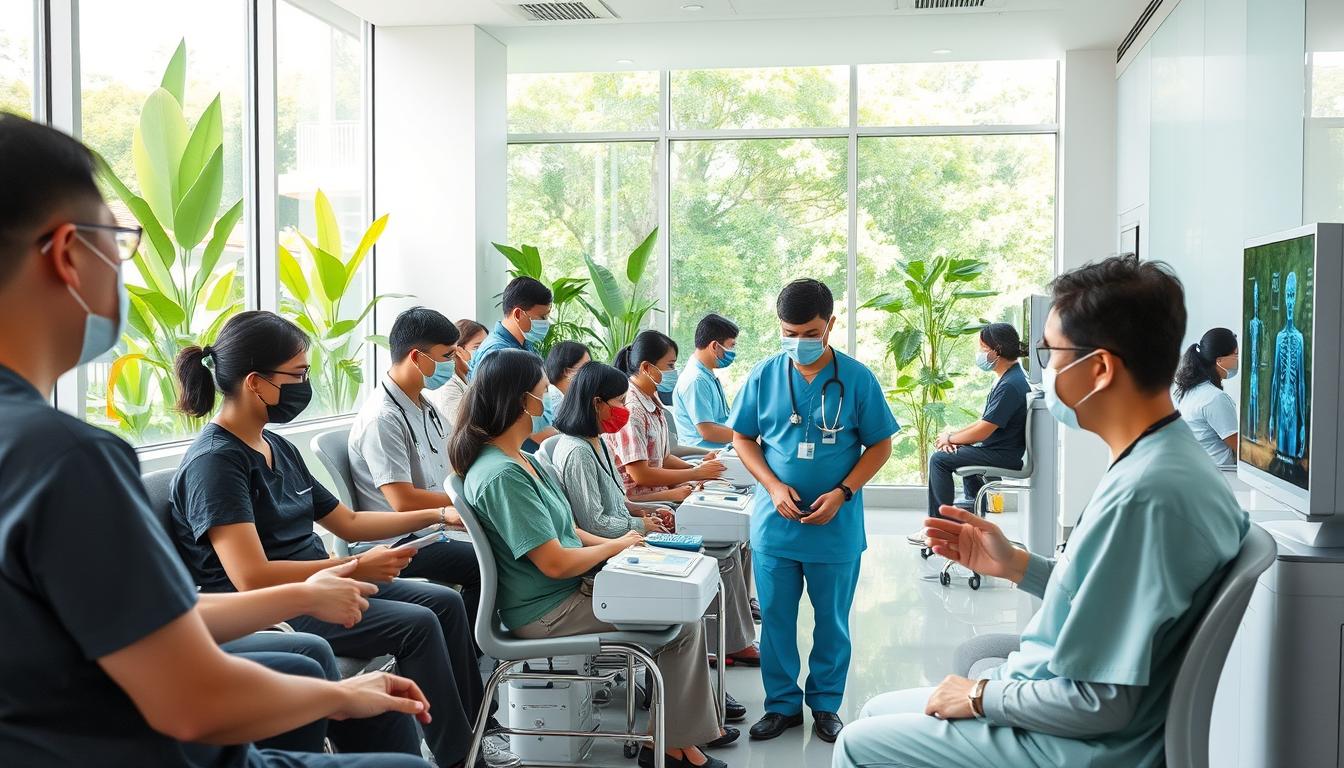
Onsite screening takes place at the workplace or another organised location. A provider sets up stations for registration, vitals, blood collection, and selected tests, then runs participants through a planned flow. The goal is convenience, scale, and minimal disruption to the working day.
Clinic screening happens in a medical facility where the full care environment is already in place. Patients attend scheduled appointments and complete tests using the clinic’s rooms, equipment, and medical team. This usually allows for broader screening packages — particularly when imaging, specialist review, or additional diagnostics are part of the program.
Both formats can be clinically sound. The difference is operational design. Onsite programs build for access and volume. Clinic programs build for depth and flexibility.
Onsite vs Clinic Screening: A Direct Comparison
| Factor | Onsite Screening | Clinic Screening |
|---|---|---|
| Participation | Higher — no travel required | Moderate — depends on scheduling ease |
| Test Range | Core blood work, vitals, selected tests | Broader — imaging, specialist review, advanced panels |
| Operational Disruption | Low — fits within the working day | Moderate — requires employee travel time |
| Best Workforce Size | Medium to large, concentrated teams | Small teams, dispersed or hybrid workforces |
| Follow-Up Access | May require separate clinic referral | Integrated — same-visit or same-system follow-up |
| Privacy | Managed — requires careful setup | High — standard clinical environment |
| Setup Cost | Higher — logistics, transport, staffing | Lower — infrastructure already in place |
When Onsite Screening Makes More Sense
For employers, onsite screening is often the strongest option when participation is the priority. Employees who need to travel, rearrange shifts, or book separate appointments are less likely to attend. Bringing the screening team to the office removes most of those barriers in one move.
This model works particularly well for larger teams, annual wellness events, and organisations wanting to complete screening within a defined time window. A well-run onsite program processes employees efficiently — often in 20 to 30 minutes per participant depending on the test mix. That makes it easier for HR and people operations teams to support wellness goals without causing a full day of downtime.
Onsite screening also gives employers tighter control over logistics. Scheduling is centralised, communications are simpler, and participation tracking is more consistent. For companies with recurring screening needs, this makes year-to-year planning far more manageable.
The model does have practical limits. Space must suit privacy, registration flow, and safe phlebotomy. Test menus may be narrower than a clinic package. Employees needing imaging, detailed consultation, or follow-up diagnostics will likely need a second appointment — a consideration worth factoring into the overall program design.
When Clinic Screening Is the Better Fit
Clinic screening suits situations where screening scope matters more than location. A clinic supports broader test combinations, more controlled medical workflows, and access to equipment that cannot easily move onsite.
This matters for executives, older adults, or patients wanting a more comprehensive preventive review in one setting. When the screening includes radiology, ultrasound, cardiac testing, cancer markers, or same-visit physician assessment, the clinic model is often more efficient overall — even when travel is required.
For employers, clinic screening is also smarter when the workforce is smaller, spread across multiple sites, or working in hybrid arrangements. Rather than organising a mobile setup for a limited headcount, companies issue appointment slots and let employees attend at times that suit their schedule.
The clinic environment also supports follow-up. When a result requires immediate clarification, repeat measurements, or a doctor consultation, those steps happen more smoothly within the same care system. Continuity matters because a screening program should not end at data collection.
The Ministry of Health Singapore supports access to structured, facility-based health screening as part of national preventive care guidelines — reinforcing why clinic infrastructure remains the most appropriate setting for comprehensive screening programs.
Screening Scope Is Often the Deciding Factor
One of the biggest differences in the onsite vs clinic debate is the range of tests each format delivers well. Blood pressure, BMI, blood tests, glucose, cholesterol, and selected urine tests are commonly suitable for onsite delivery. These are high-value, scalable tests that support broad employee health programs.
When the package becomes more complex, clinic delivery usually becomes more practical. Imaging services, larger diagnostic panels, physician-led assessments, and certain gender- or age-specific tests are easier to manage in a controlled clinical environment. The same applies when fasting requirements, specimen handling, or detailed medical history review need tighter oversight.
An experienced provider can deliver a substantial range of services at the workplace. There is always a threshold, however, where the clinic model becomes more efficient and more clinically complete.
Participation, Convenience, and Employee Experience
When uptake is the main concern, onsite usually wins. Employees complete screening more readily when it happens where they already are. Less travel, less time away from work, and fewer scheduling obstacles add up to meaningfully higher participation rates. That convenience can be the difference between a wellness initiative reaching most of the workforce and one that only attracts the already health-conscious.
Clinic screening can offer a more private and personalised experience. Some employees prefer not to complete health checks in or near the workplace — even when privacy protocols are strong. A clinic setting may feel more comfortable for discussing personal history, asking questions, or completing more sensitive tests.
For individual patients, the trade-off is straightforward. Convenience and speed point toward onsite or workplace-based options. Reassurance, comprehensive testing, and one-stop follow-up point toward a clinic visit.
The Health Promotion Board Singapore supports both workplace and facility-based preventive health screening as part of the national Healthier SG initiative — reinforcing that the best format is the one employees actually complete.
Cost Is Not Just About the Package Price
Cost comparisons between onsite and clinic screening are rarely simple. Onsite programs involve setup fees, staffing requirements, transport, and sometimes minimum participant counts. These can make them less economical for very small groups. For medium to large employee populations, operational efficiency often offsets those costs — particularly when higher participation improves the overall program value.
Clinic screening typically carries lower delivery complexity because infrastructure is already in place. For individuals and smaller teams, this makes clinic-based care more cost-effective. It also removes the risk of paying for a mobile setup that proves underused.
Employers should also factor in indirect costs. When employees spend hours travelling to appointments, the productivity loss may outweigh the apparent savings of a clinic-only model. Conversely, when an onsite event requires a second round of referrals because the package was too limited, total effort increases — and so does employee frustration.
How to Choose: Your Quick Decision Guide
🧭 Onsite or Clinic? Use This Guide
✅ Choose Onsite if: You have a medium-to-large concentrated team, participation rate is your top priority, the test scope covers core metabolic and cardiovascular markers, and you want to complete screening within the working day.
✅ Choose Clinic if: Employees need broader diagnostics including imaging or specialist review, your team is small or dispersed, employees prefer a private clinical environment, or you need integrated follow-up within the same system.
✅ Choose Hybrid if: You have diverse employee groups — onsite for the general workforce and clinic-based or home-based screening for senior executives or those needing broader coverage.
Reporting and Follow-Up Should Shape the Decision
A screening program is only as useful as the action that follows. Fast reporting, clear interpretation, and organised next steps are not optional — they are central to the value of any format.
For corporate programs, digital reporting and reliable turnaround times support HR planning and employee communication. For individuals, personalised results and access to follow-up consultation turn numbers into decisions. A provider with strong operational systems delivers this in either format — but the key question is always: what happens after the sample is collected and the vitals are recorded?
HOP Medical Centre supports onsite, clinic-based, and home-based screening with structured participant flow, strong phlebotomy capability, and digital report retrieval. The Executive Health Screening program suits professionals wanting a comprehensive clinic-based review. The corporate health screening service suits employers needing scalable delivery across multiple formats within one coordinated system.
The Ministry of Manpower Singapore sets out occupational health and safety standards relevant to employer-arranged health programs — a useful compliance reference for HR teams designing onsite or clinic-based screening frameworks for regulated industries.
View Our Corporate Screening DetailsFrequently Asked Questions: Onsite Screening vs Clinic Screening
What is the main difference between onsite screening and clinic screening? Onsite screening brings the screening team to the workplace, prioritising convenience and participation for large groups. Clinic screening takes place in a medical facility, offering a broader test range including imaging, specialist review, and integrated follow-up. Both formats can be clinically sound — the right choice depends on workforce size, screening scope, and operational priorities.
Which format delivers higher employee participation? Onsite screening typically achieves higher participation because it removes travel and scheduling barriers. Employees complete screening more readily when it happens in their workplace without disrupting the working day. Clinic screening can still achieve strong participation when appointment scheduling is easy and the program is well communicated.
Can onsite screening include imaging or specialist review? Generally, imaging and specialist-level review are better suited to a clinic environment. Equipment such as ultrasound machines, X-ray units, and cardiac testing tools are difficult to replicate in a workplace setting. Onsite programs typically cover core blood tests, vitals, and selected diagnostic markers. Employees needing imaging usually require a separate clinic visit.
Is onsite screening suitable for small companies? It can be, but the economics may not always favour it. Onsite programs often involve setup costs, transport, and minimum participant requirements. For teams under 30 to 40 employees, clinic-based screening may be more cost-effective. A hybrid approach — clinic-based for most staff plus home-based options for senior executives — often suits smaller organisations well.
How do I ensure employee privacy during onsite screening? A reputable onsite screening provider manages privacy through careful station setup, individual consultation areas, and strict data handling protocols. Individual results go directly to each employee — not the employer. Employers receive only anonymised aggregate data for wellness planning purposes. Confirm these arrangements with your provider before booking.
Can the same provider deliver both onsite and clinic screening? Yes — and that is often the most efficient arrangement. HOP Medical Centre delivers corporate health screening in both onsite and clinic-based formats, with home-based options also available. Using a single provider for different formats ensures consistent clinical standards, coordinated reporting, and a smoother experience for both HR teams and employees.
How quickly do results come back after onsite screening? Results timelines depend on the tests involved. Most blood test results return within a few working days after laboratory processing. HOP Medical Centre delivers personalised digital reports once all results complete clinical review — helping employees and HR teams access findings promptly without waiting weeks for fragmented updates.
What should HR teams ask a provider before choosing a format? Ask about participant throughput, test range, privacy arrangements, report turnaround time, escalation processes for abnormal findings, and whether the provider can scale across different locations or formats. Also clarify whether the program ends at data collection or includes follow-up pathways — this significantly affects the program’s clinical value.
Is a hybrid model combining onsite and clinic screening a good option? Yes — often it is the most practical choice for organisations with diverse employee groups. Onsite screening suits the general workforce where participation is the priority. Clinic-based or home-based options suit senior executives, employees needing broader diagnostics, or staff in hybrid or remote arrangements. HOP Medical Centre supports all three formats within one coordinated corporate system.
The Best Format Is the One That Gets Done — And Done Right
The onsite vs clinic screening debate rarely has one correct answer. What matters is choosing the format that makes it easiest to complete the right tests, get results promptly, and follow through when something needs attention.
At HOP Medical Centre, we design corporate screening programs around exactly that principle — matching the format to the workforce, not applying a fixed model regardless of fit. With onsite delivery across Singapore, clinic locations in Orchard (Palais Renaissance) and Tampines (CPF Building), and home-based options for senior staff, our team helps employers build screening programs that actually work in practice.
Preventive care delivers value when the process is easy enough to complete and thorough enough to matter. That is the standard we hold ourselves to — and the one worth applying when you make your next screening decision.
Explore HOP Medical Centre’s corporate screening packages to find the right format for your workforce.