
Hair Loss Treatment Singapore: Causes, Options, and When to See a Doctor
✍️ Written by: HOP Medical Centre Health Content Team
📅 Published: July 2026 | 🔄 Last Reviewed: July 2026
Hair loss treatment in Singapore is something many people search for quietly — often after months of watching hair thin in the shower drain or recede at the temples before deciding to do something about it. At HOP Medical Centre, this delay is one of the most consistent patterns we see. Most patients arrive having already tried over-the-counter shampoos and supplements for months. Consequently, they arrive later than is clinically ideal — because many hair loss treatments work best when started early.
Hair loss affects both men and women in Singapore. The causes range from hereditary pattern baldness to hormonal conditions, nutritional deficiencies, thyroid disorders, and stress. Furthermore, the right treatment depends entirely on the underlying cause. Applying a generic solution without identifying the cause is not only ineffective — it can delay access to a treatment that would actually work.
This guide covers what causes hair loss in Singapore, which treatments are clinically supported, how to tell when thinning warrants a medical assessment, and what to expect from a hair loss consultation at HOP Medical Centre.
Book Your Hair Loss Consultation at HOP Medical CentreWhy Identifying the Cause of Hair Loss Matters First
Hair loss is a symptom — not a diagnosis. The clinical cause behind it determines which treatment will be effective. Treating androgenetic alopecia — genetic hair loss — with the same approach used for telogen effluvium — stress-related shedding — produces poor results for both conditions.
Many patients assume their hair loss is genetic because a parent or sibling experienced similar thinning. This is often correct. However, it is not always the case — and assuming a genetic cause when a treatable medical condition is actually responsible delays effective treatment unnecessarily. Thyroid disorders, iron deficiency anaemia, hormonal imbalances, and scalp conditions all cause significant hair loss. Importantly, all of them respond to specific clinical treatment once identified.
A thorough clinical assessment at HOP Medical Centre therefore begins with a medical history, a scalp examination, and targeted blood tests — rather than moving directly to a product recommendation. This sequence ensures the right cause is identified before the right treatment is selected.
The Ministry of Health Singapore recognises hair loss as a legitimate medical concern warranting clinical assessment when associated with systemic conditions — reinforcing why a medical consultation delivers more value than self-directed treatment for persistent or significant hair loss.
Common Causes of Hair Loss in Singapore
| Cause | Who It Affects | Key Features |
|---|---|---|
| Androgenetic Alopecia (Pattern Baldness) | Men and women — most common cause overall | Gradual thinning in a predictable pattern — temples and crown in men, central parting in women |
| Telogen Effluvium | Both sexes — often follows a triggering event | Diffuse shedding across the scalp — typically begins 2–3 months after a stress trigger |
| Thyroid Disorders | More common in women — both overactive and underactive thyroid | Diffuse thinning — often accompanied by fatigue, weight changes, and mood shifts |
| Iron Deficiency Anaemia | Women — particularly those with heavy periods | Diffuse shedding — often with fatigue and pallor; responds well to iron supplementation |
| Hormonal Imbalances (PCOS, Menopause) | Women — hair loss linked to androgen excess or oestrogen decline | Thinning at the crown or diffuse — often alongside other hormonal symptoms |
| Alopecia Areata | Both sexes — autoimmune condition | Patchy, well-defined areas of hair loss — can affect any hair-bearing area |
| Medication Side Effects | Both sexes — depends on specific medication | Diffuse shedding — common with chemotherapy, blood thinners, antidepressants, and retinoids |
| Nutritional Deficiencies | Both sexes — zinc, biotin, Vitamin D deficiency | Diffuse thinning — responds well to targeted supplementation once deficiency is confirmed |
Male Hair Loss: Pattern Baldness and Beyond
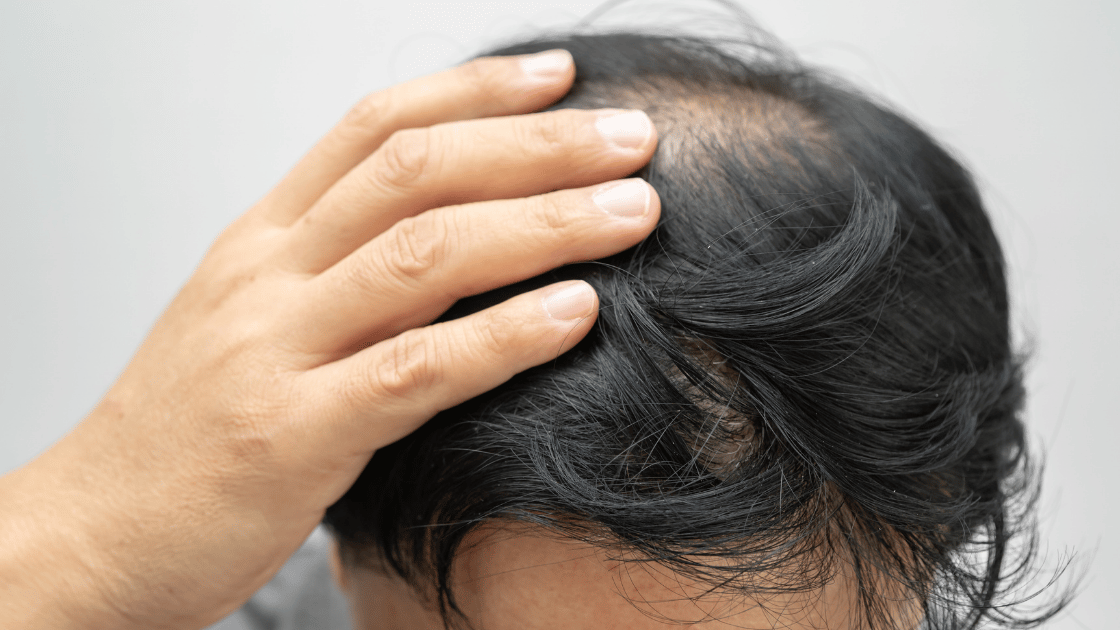
Male pattern baldness — androgenetic alopecia — is by far the most common cause of hair loss in men. It affects up to 50% of men by age 50 in Singapore. The condition is driven by dihydrotestosterone (DHT) — a hormone derived from testosterone that causes genetically susceptible hair follicles to shrink progressively until they stop producing visible hair.
The pattern follows a predictable sequence. Hair recedes at the temples first, then thins at the crown. Over years, these areas merge. The timing and extent depend on genetics — both maternal and paternal family history contribute.
The good news is that male pattern baldness has well-established, evidence-based treatment options that work best when started early. Early treatment preserves follicles that have not yet permanently miniaturised — which is why starting treatment before significant loss has occurred produces better results than waiting.
Additionally, men experiencing hair loss alongside other symptoms — reduced libido, fatigue, mood changes, or weight gain — benefit from a testosterone assessment as part of their hair loss evaluation. Low testosterone and elevated DHT can both contribute to hair loss through different mechanisms. HOP Medical Centre’s testosterone replacement therapy service addresses hormonal drivers of hair loss alongside the broader hormonal picture.
Female Hair Loss: A More Complex Clinical Picture
Women experience hair loss differently from men — both in pattern and in the range of likely causes. Female pattern hair loss presents as diffuse thinning across the crown and central parting rather than the receding temples typical of male pattern baldness. However, the causes of hair loss in women extend significantly beyond genetics.
Telogen effluvium is extremely common in women after childbirth, major surgery, significant illness, crash dieting, or severe psychological stress. The hair growth cycle shifts en masse into the resting phase — producing diffuse shedding that typically peaks two to three months after the triggering event. The good news is that telogen effluvium usually resolves on its own once the underlying trigger is addressed. However, identifying the trigger requires a clinical conversation rather than a product recommendation.
Thyroid disorders produce diffuse hair loss in both men and women — but are significantly more common in women. Importantly, both overactive and underactive thyroid cause thinning. A simple TSH blood test identifies this cause — and effective treatment of the thyroid condition typically restores hair growth over months.
PCOS and other androgen excess conditions cause hair thinning at the crown alongside other signs of hormonal imbalance. The oestrogen decline of perimenopause and menopause also shifts the hormonal balance toward greater androgenic activity — explaining why many women notice significant hair thinning in their late 40s and 50s.
What Blood Tests Does a Hair Loss Assessment Include?
🔬 Blood Tests Included in a Hair Loss Assessment at HOP Medical Centre
🔹 Full blood count: Screens for anaemia — a common and treatable cause of diffuse hair shedding
🔹 Ferritin and iron studies: Iron deficiency can cause significant hair loss even without frank anaemia
🔹 Thyroid function (TSH, T3, T4): Both overactive and underactive thyroid cause diffuse hair thinning
🔹 Hormonal panel (where relevant): LH, FSH, oestradiol, DHEA-S, testosterone — assesses hormonal drivers in women with suspected PCOS or menopausal hair loss
🔹 Vitamin D: Deficiency is common in Singapore despite the tropical climate — linked to diffuse hair thinning
🔹 Zinc: Deficiency produces hair loss and nail changes — straightforward to detect and correct
🔹 Fasting glucose and HbA1c: Diabetes and insulin resistance are associated with hair loss — particularly in women
Hair Loss Treatment Options at HOP Medical Centre
Once the clinical assessment identifies the cause of hair loss, the treatment plan is matched to it. No single treatment suits every patient — which is why assessment precedes recommendation at HOP Medical Centre.
Minoxidil is the most widely used topical treatment for both male and female pattern hair loss. Applied directly to the scalp, it extends the growth phase of the hair cycle and increases follicle size. It is available in liquid and foam formulations, and in both 2% and 5% concentrations. Results become visible after three to six months of consistent use. Furthermore, continued use is required to maintain results — stopping minoxidil leads to shedding of the hair gained through treatment.
Finasteride is an oral medication for male pattern baldness. It works by blocking the conversion of testosterone to DHT — reducing the hormonal signal that causes follicle miniaturisation. Clinical evidence shows finasteride reduces further hair loss in most men and produces visible regrowth in many. Notably, it is not appropriate for women of childbearing potential due to effects on foetal development. The prescribing doctor at HOP Medical Centre assesses suitability individually before prescribing.
Additional Treatment Options for Hair Loss
Spironolactone and other anti-androgens are used for women with androgen-driven hair loss — particularly those with PCOS or elevated androgens. These medications reduce androgenic activity at the follicle level. Additionally, they often improve other androgen-related symptoms such as acne and facial hair alongside the hair loss.
Nutritional correction addresses deficiency-driven hair loss directly. Iron supplementation restores hair growth in iron-deficient patients, typically over three to six months. Vitamin D, zinc, and biotin deficiencies each respond to targeted supplementation once confirmed through blood testing. Supplementing without confirming a deficiency, however, produces little benefit and wastes money on products the body does not need.
PRP (platelet-rich plasma) therapy is an injectable treatment using the patient’s own blood — processed to concentrate growth factors — injected into the scalp to stimulate follicle activity. Evidence for PRP in androgenetic alopecia and alopecia areata is growing. It suits patients who want a procedural option alongside or instead of oral or topical medication.
Lifestyle and stress management address telogen effluvium directly. When the triggering stressor resolves and nutritional support is provided, the hair cycle typically normalises over three to six months. The Health Promotion Board Singapore supports mental health and stress management as key components of overall health — reinforcing why stress-related hair loss deserves both clinical and lifestyle attention.
When Should You See a Doctor About Hair Loss in Singapore?
Many patients try to manage hair loss independently for months or years before seeking a clinical opinion. However, several signs indicate that a medical assessment is the right next step rather than another round of over-the-counter products.
See a doctor if hair loss is sudden rather than gradual. Rapid or patchy hair loss is less likely to be genetic pattern baldness and more likely to reflect an underlying medical condition. See a doctor if hair loss is accompanied by other symptoms — fatigue, weight changes, scalp irritation, skin changes, or irregular periods. These point toward systemic causes that require blood tests rather than topical products.
Additionally, seek a clinical opinion if hair loss is causing significant psychological distress. Hair loss affects self-confidence, relationships, and quality of life in ways that are clinically meaningful — not merely cosmetic. Furthermore, the earlier a treatable cause is identified, the more effectively it can be addressed.
HOP Medical Centre’s hair loss service is available to both men and women at Orchard (Palais Renaissance) and Tampines (CPF Building). Appointments are confidential and clinically focused — not cosmetic sales consultations. The clinical team identifies the cause, discusses realistic treatment expectations, and develops a plan matched to your specific situation.
Book Your Hair Loss Assessment at HOP Medical CentreFrequently Asked Questions: Hair Loss Treatment Singapore
What causes hair loss in Singapore?
The most common cause of hair loss in both men and women in Singapore is androgenetic alopecia — genetic pattern baldness driven by DHT sensitivity. However, thyroid disorders, iron deficiency anaemia, PCOS, hormonal changes around menopause, stress-related telogen effluvium, nutritional deficiencies, and medication side effects all cause significant hair loss. Identifying the specific cause through clinical assessment and blood tests is the essential first step before any treatment is recommended.
What is the best hair loss treatment in Singapore?
The best treatment depends entirely on the underlying cause. For male pattern baldness, finasteride and minoxidil are the most evidence-based options. For female pattern hair loss, minoxidil and anti-androgens are commonly used. Nutritional deficiencies respond to targeted supplementation. Thyroid-related hair loss resolves with effective thyroid treatment. At HOP Medical Centre, treatment recommendations follow the clinical assessment rather than preceding it.
How long does hair loss treatment take to work?
Most hair loss treatments require three to six months before visible results appear. Minoxidil produces initial shedding in the first few weeks — a normal part of the hair cycle transition — before new growth becomes visible. Finasteride typically reduces shedding within three months and produces visible regrowth in many patients by six months. Nutritional corrections produce improvement over three to six months as deficiencies resolve. Patience and consistency are therefore essential components of any hair loss treatment program.
Can hair loss be caused by stress?
Yes. Stress-related hair loss — telogen effluvium — is very common in Singapore’s high-demand working environment. Significant physical or emotional stress shifts large numbers of hair follicles simultaneously into the resting phase. Shedding typically begins two to three months after the stressful event. The condition usually resolves once the trigger is removed and nutritional support is provided. However, it can become chronic when stress remains ongoing. A clinical assessment at HOP Medical Centre distinguishes stress-related shedding from other causes.
Is hair loss treatment different for men and women?
Yes — significantly. Male pattern baldness typically responds to finasteride and minoxidil. Women of childbearing potential cannot use finasteride due to safety concerns. Female hair loss treatment depends more heavily on identifying the underlying hormonal, nutritional, or thyroid cause — and addressing it specifically. Anti-androgens such as spironolactone suit women with androgen excess. Furthermore, the blood test panel for female hair loss assessment is broader than for males.
More Questions About Hair Loss Treatment in Singapore
Does minoxidil work for women?
Yes. Minoxidil — in both topical and oral low-dose forms — is an evidence-based treatment for female pattern hair loss. The 2% concentration is most commonly recommended for women, though some clinicians use the 5% formulation where clinically appropriate. Results require consistent use over at least three to six months. Stopping treatment leads to loss of the hair gained — so it is a long-term commitment rather than a short course.
What is PRP therapy for hair loss and does it work?
PRP — platelet-rich plasma — therapy uses a concentration of the patient’s own blood growth factors injected into the scalp to stimulate follicle activity. Growing clinical evidence supports PRP for androgenetic alopecia and alopecia areata. It suits patients wanting a procedural option alongside or instead of oral or topical medication. Results typically emerge over three to six months following an initial course of sessions. HOP Medical Centre’s clinical team assesses suitability for PRP as part of the individual treatment plan.
Can iron deficiency cause hair loss even without anaemia?
Yes. Ferritin — stored iron — can be low enough to impair hair growth before full anaemia develops. The hair follicle is particularly sensitive to iron stores. Consequently, patients with low-normal ferritin but normal haemoglobin may still experience significant hair shedding. This is why iron deficiency hair loss blood tests at HOP Medical Centre include both full blood count and ferritin — not just haemoglobin.
Does HOP Medical Centre treat alopecia areata?
Yes. Alopecia areata — an autoimmune condition producing patchy hair loss — is assessed and managed at HOP Medical Centre. Treatment options include topical and intralesional corticosteroids, minoxidil, and where appropriate, referral to a dermatologist for advanced therapy. The clinical team tailors the approach to the extent of involvement, the patient’s age, and individual clinical factors.
Treat the Cause — Not Just the Symptom
Hair loss treatment in Singapore works best when it starts with a clear answer to one question: why is the hair falling out? Without that answer, even the most effective treatments in the world produce disappointing results — because they are addressing the wrong problem.
At HOP Medical Centre, every hair loss assessment begins with that clinical question. Blood tests identify systemic causes. Scalp examination guides local treatment decisions. The treatment plan that follows is built around your specific cause — not a generic protocol applied to every patient who walks through the door.
With clinic locations at Orchard (Palais Renaissance) and Tampines (CPF Building), direct booking without referral, and a clinical team that treats hair loss as the medical concern it is, HOP Medical Centre makes effective hair loss treatment genuinely accessible in Singapore.
Explore HOP Medical Centre’s hair loss treatment service and take the first step toward understanding what is actually causing your hair loss — and what will actually work.