
Breast Ultrasound vs Mammogram: Which Screening Do You Need?
Breast Ultrasound vs Mammogram: Which Screening Do You Need?
✍ Written by: HOP Medical Centre Health Content Team 📅 Published: November 2026 | 🔄 Last Reviewed: November 2026
Breast ultrasound vs mammogram is one of the most common questions women ask before booking a breast check. Maybe a friend told you an ultrasound is gentler, so you’d rather skip the squeeze. Or perhaps you’re in your 30s, you’ve felt a small lump, and you aren’t sure which test to ask for. Both tests are useful. However, they work differently and pick up different things, so the right choice depends on your age, your breast tissue and why you’re getting checked.
This guide explains how each test works, what each one is good at, when you might need both, and how to book either one at HOP Medical Centre.
How a Mammogram Works
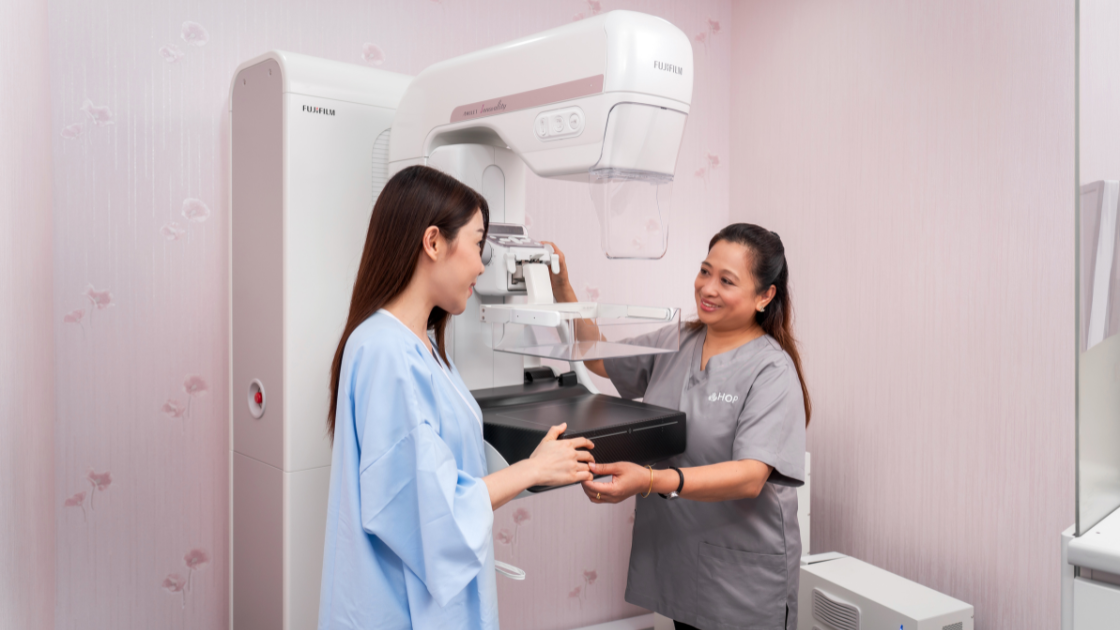
A mammogram is a low-dose X-ray of the breast. During the test, each breast is pressed gently between two plates for a few seconds. The pressure spreads the tissue out so the image is clearer, and it uses less radiation. It can feel uncomfortable, but it’s brief.
Mammograms are especially good at spotting microcalcifications. These are tiny calcium deposits that can be one of the earliest signs of breast cancer, sometimes before any lump can be felt. For that reason, mammography is regarded as the standard screening test for women aged 40 and above.
How a Breast Ultrasound Works
A breast ultrasound uses sound waves instead of radiation. A radiographer moves a small probe over your breast with some gel, and images appear on a screen in real time. There’s no compression and no radiation, so it’s generally comfortable and safe at any age.
Ultrasound is particularly good at two things. First, it can tell whether a lump is a fluid-filled cyst or a solid mass. Second, it sees through dense breast tissue more clearly than a mammogram often can. On the other hand, it can’t reliably detect microcalcifications. The quality of the scan also depends on the skill of the person doing it.
Breast Ultrasound vs Mammogram: Key Differences
Put simply, the two tests complement each other rather than compete. A mammogram looks for early changes, such as calcifications, across the whole breast. An ultrasound, meanwhile, takes a closer look at specific areas and works better in dense tissue. The table below sets out the main differences side by side.
| Feature | Mammogram | Breast ultrasound |
|---|---|---|
| How it works | Low-dose X-ray with brief compression | Sound waves; no compression |
| Radiation | Low dose | None |
| Best at | Spotting microcalcifications and early changes | Telling cysts from solid lumps; seeing through dense tissue |
| Limitations | Less clear in dense breasts | Can’t reliably detect microcalcifications; depends on operator skill |
| Typical use | Routine screening from age 40 | Younger women, dense breasts, checking a lump |
| Pregnancy | Avoid | Safe |
| HOP price (nett, incl. GST) | $174.40 | $163.50 |
Prices exclude a one-time doctor consultation charge of $32.70.
Why Breast Density Matters
Breasts are made of fatty tissue and dense tissue (glands and fibrous tissue). On a mammogram, fat looks dark, while dense tissue looks white. Unfortunately, tumours also look white, so in dense breasts a small cancer can be hidden. Radiologists sometimes compare this to looking for a snowball in a snowstorm.
Dense breasts are common, especially in younger women, and density usually decreases with age. Your mammogram report may state your breast density. If you’re told your breasts are dense, ask your doctor whether adding an ultrasound makes sense for you.
Which Test Is Right for You?
General guidance from the Singapore Cancer Society suggests a yearly mammogram for women aged 40 to 49, and a mammogram every two years from age 50 (https://singaporecancersociety.org.sg/screening-for-breast-cancer/). Below 40, routine screening isn’t usually recommended unless you have a higher risk.
Your situation also shapes the first step. Higher-risk signs include several close relatives (mother, sister or daughter) with breast cancer, a relative diagnosed before 40, or a family history of breast cancer alongside ovarian or colon cancer. If any of these apply, speak to a doctor about a personalised plan.
💡 Which Test to Book First
- Under 40, no symptoms: routine imaging usually isn’t needed unless you’re at higher risk.
- Under 40 with a lump or concern: a breast ultrasound is often the first test, after seeing a doctor.
- Aged 40 to 49: a yearly mammogram, with an ultrasound added if your breasts are dense.
- 50 and above: a mammogram every two years, with an ultrasound if advised.
- Pregnant or possibly pregnant: avoid mammograms; ultrasound uses no radiation.
When You Might Need Both
Many women benefit from having both tests. For instance, a doctor may suggest both if you have dense breasts, if a mammogram shows something that needs a closer look, or if you’ve felt a lump. Together, the two tests give a fuller picture than either one alone. Neither test can confirm cancer on its own, though. If something looks suspicious, a biopsy is the next step.
Breast Screening at HOP Medical Centre
At HOP Medical Centre, you can book a breast ultrasound or a mammogram on its own at our Orchard and Tampines clinics (https://hop.sg/breast-cancer-screening/). Each scan takes about 15 to 30 minutes, and you’ll receive your report within one week with a doctor’s review. All breast ultrasounds are performed by female radiographers.
HOP also offers MastoCheck, a blood test that measures several protein biomarkers. It’s designed to complement imaging, not replace it, and may suit women aged 20 to 40 with above-average risk.
If you’d prefer a broader check, breast imaging is included in several packages. The Female Cancer Screening Package includes a breast ultrasound, or a mammogram for women over 40, along with other cancer markers and tests (https://hop.sg/hop-cancer-screening-package/). Alternatively, the women’s health screening packages cover a range of tests for different life stages (https://hop.sg/womens-health-screening-packages/).
💡 Preparing for Your Breast Screening
- Book at least one week after your period, when breasts are usually less tender.
- On mammogram day, skip deodorant, perfume, powder or cream on your chest and underarms.
- Wear a loose, two-piece outfit.
- Bring any previous breast scans for comparison.
- Tell the team if you are or might be pregnant.
Frequently Asked Questions About Breast Ultrasound vs Mammogram
1. Can a breast ultrasound replace a mammogram?
Not for women aged 40 and above. Ultrasound can’t reliably detect microcalcifications, which are often an early sign of cancer. It’s best used alongside a mammogram rather than instead of one.
2. Is a mammogram painful?
It can be uncomfortable because the breast is compressed, but each compression lasts only a few seconds. Booking a week after your period can make it more comfortable.
3. Is breast ultrasound safe?
Yes. It uses sound waves, not radiation, so it’s safe for women of any age, including during pregnancy.
4. What age should I start mammograms?
General guidance suggests yearly mammograms from 40 to 49 and every two years from 50. Women at higher risk may need to start earlier, so check with your doctor.
5. I have dense breasts. What should I do?
Ask your doctor whether to add a breast ultrasound to your mammogram. Dense tissue can hide small changes on a mammogram.
More Questions About Breast Screening
6. How long do results take?
At HOP, breast imaging reports are provided within one week, together with a doctor’s review and recommendations.
7. Can I request a female radiographer?
At HOP, all breast ultrasounds are performed by female radiographers. For other tests, you can let the team know your preference when you book.
8. How long does each scan take?
Each mammogram or ultrasound takes about 15 to 30 minutes. If you’re having more than one test, plan for 45 to 60 minutes.
9. Do I need a doctor’s consultation?
A one-time doctor consultation applies alongside the scan. The doctor reviews your results and recommends any next steps.
Know Your Breasts, Choose the Right Scan
There’s no single winner in the breast ultrasound vs mammogram question. Each test has its own strengths, and the best choice depends on your age, breast density and risk. If you’re unsure, a short consultation can help you choose the right test, or the right combination. To book a discreet appointment, WhatsApp HOP Medical Centre Orchard (Palais Renaissance) at +65 8830 0945 or Tampines (CPF Building) at +65 8842 1665.