
Home Based Health Screening in Singapore: What It Includes and Who It Suits
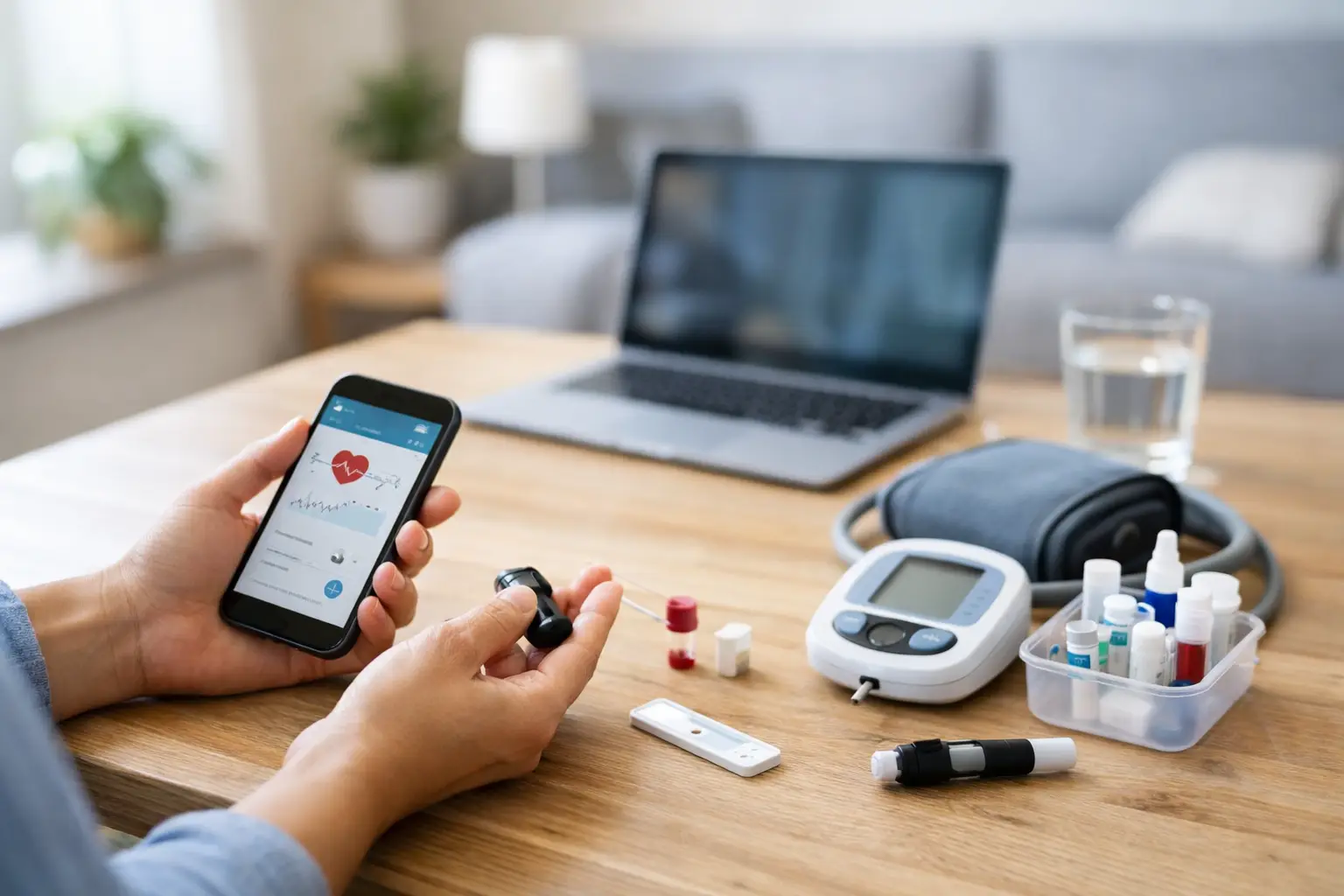
✍️ Written by: HOP Medical Centre Health Content Team
📅 Published: April 2026 | 🔄 Last Reviewed: April 2026
At HOP Medical Centre, one pattern appears consistently when we speak with busy professionals and HR teams about preventive care: a missed screening is rarely about lack of interest. More often, it comes down to time, logistics, and the effort of fitting a clinic visit into an already full week.
That is exactly why home based health screening has become a practical option for individuals, families, and employers across Singapore. Over more than 20 years of delivering preventive health programs, our team has seen that participation improves significantly when the process removes friction rather than adding to it. When screening comes to you, it is far more likely to happen on time — and on time is when early detection matters most.
Book a Home Based Health ScreeningWhat Home Based Health Screening Usually Includes
Home based health screening is not a stripped-down version of preventive care. In many cases, it covers the same core components people expect from a clinic-led program — particularly when the provider brings strong operational capability and a broad screening portfolio to the visit.
A typical home visit includes medical history review, vital signs, anthropometric measurements, and blood collection. Depending on the package, it may also cover urine testing, diabetes and cholesterol markers, liver and kidney function, and selected cancer markers. Some providers arrange imaging or follow-up tests separately when those services require facility-based equipment.
What Belongs at Home and What Does Not
That last point matters. Not every test belongs in a home setting. Blood work and routine measurements suit home collection well. Imaging, treadmill studies, and certain specialist investigations require facility-based equipment and clinical oversight. A reliable provider explains clearly what the home visit covers, what requires a second step, and how results from both combine into one consolidated report.
HOP Medical Centre’s Home-Based Health Screening is structured around exactly this transparency — so patients understand the full scope of their program before the visit begins.
Why Home Based Health Screening Works for Busy Adults
The strongest reason professionals choose home screening is efficiency. A clinic appointment may take an hour on paper, but in reality it often includes travel, parking, check-in queuing, and recovery time before the rest of the day resumes. A well-run home visit cuts that disruption significantly.
For executives and working adults, less time away from work matters enormously. For older family members, removing transport arrangements and long waits reduces a genuine barrier. For parents, completing a screening without reorganising childcare makes a meaningful difference. Preventive care happens more consistently when the process is easy to complete.
There is also a comfort dimension. Some people are more relaxed in their own home — which can make the experience smoother, particularly for blood collection. That said, home is not the right choice for everyone. Patients with a history of fainting during blood draws, limited home space, or a preference for immediate imaging and same-day physician review may find a clinic visit more appropriate.
The Health Promotion Board Singapore supports accessible preventive care for working adults as part of the national Healthier SG strategy — reinforcing why removing logistical barriers to screening participation directly supports public health goals.
What Corporate Teams Should Consider
For HR leaders and business owners, home based health screening complements existing corporate wellness programs rather than replacing them. It works particularly well for hybrid teams, senior staff with limited availability, and employee groups spread across different locations.
The main operational question is scalability. A home model works best when the provider coordinates scheduling efficiently, standardises collection protocols, and delivers reports within a predictable timeframe. Without that operational discipline, the convenience of home visits gives way to fragmented booking, inconsistent participant experience, and delayed reporting.
Choosing a Provider With the Right Operational Capability
Provider experience determines how well a home screening program actually performs. Established screening operators bring stronger phlebotomy processes, clearer escalation pathways, and better systems for digital reporting. For employers, that translates into less administrative follow-up and greater confidence that screenings complete with minimal disruption.
Cost is another consideration. Home visits may carry different pricing from clinic-based or large on-site screening events — travel and deployment logistics factor into the service. Whether that trade-off makes sense depends on workforce profile. A centralised office population may benefit more from on-site corporate screening. Remote employees or senior staff with difficult schedules often find home screening delivers better overall value.
Companies onboarding new staff can also combine home-based options with Pre-Employment Medical Screening for a complete preventive health offering within one coordinated system.
The Ministry of Manpower Singapore sets out occupational health and safety standards relevant to employer-arranged health programs — a useful reference for HR teams designing screening formats that meet both clinical and compliance requirements.
What to Look for in a Home Screening Provider
The quality of a home screening program depends less on the idea of home care itself and more on the provider behind it. Clinical quality, scheduling discipline, and report turnaround all determine whether the program delivers on its promise.
Start with scope. A provider should explain exactly which tests are available at home, what preparation the patient needs, and which assessments require a clinical setting. Broad service capability reduces the need for multiple vendors across blood work, imaging, and medical follow-up.
Next, examine specimen handling and phlebotomy standards. Home collection is convenient, but it depends on proper labelling, transport, and laboratory workflow. Strong phlebotomy capability is not a minor operational detail — it is central to getting accurate, usable results.
Reporting is another key differentiator. Clear, personalised reports delivered promptly benefit both patients and employers. Digital access makes a meaningful difference when participants want to retrieve records securely without chasing paperwork. When follow-up consultation sits within the same care system, managing the next steps becomes far simpler.
How the Process Should Feel From Booking to Results
A good screening experience runs on predictability. Patients should know how long the visit takes, whether fasting applies, which documents to prepare, and when results arrive. That level of clarity reduces no-shows and improves completion rates.
The home visit itself should feel efficient and professional. Identity verification, health questionnaire review, measurements, specimen collection, and post-test instructions should follow a clear sequence. For routine programs, participant flow should feel organised rather than improvised.
After the visit, turnaround time shapes whether preventive care produces action. Patients act on findings more readily when reports arrive promptly and present information in a way that is clinically sound but easy to understand. When abnormalities appear, the next step should be equally clear — lifestyle guidance, repeat testing, imaging, or a doctor consultation.
The Ministry of Health Singapore recommends that adults screen regularly for common chronic conditions — a reminder that the value of home based screening lies in making that consistency achievable, not just convenient.
Common Limitations and When Clinic Screening May Be Better
Home based health screening suits many situations well, but it is not the ideal fit for every patient. Space constraints, difficult venous access, or the need for advanced diagnostics can make a clinic visit more efficient and clinically complete.
Some patients prefer the reassurance of a full medical facility — particularly when undergoing a broader executive health screening package with imaging and specialist review. In those cases, a one-stop clinic visit completes more components in a single setting without requiring a second appointment.
Volume is another consideration. For companies screening a large number of employees at one location, an on-site corporate event tends to be more streamlined than coordinating many separate home visits. The right format depends on workforce distribution, budget, and the flexibility employees actually need.
Speak to Our Screening TeamFrequently Asked Questions About Home Based Health Screening
What is home based health screening? Home based health screening is a preventive health assessment delivered at the patient’s home by a trained clinical professional. It typically includes blood collection, vital signs, body measurements, urine testing, and health history review. Results go through laboratory processing and return as a personalised digital report. It offers the same clinical standards as clinic-based screening — with the added convenience of no travel or waiting room time.
What tests are available through home based health screening in Singapore? Most home screening programs cover full blood count, fasting glucose or HbA1c, cholesterol panel, liver and kidney function, uric acid, urine analysis, and vital signs. Some packages add thyroid function, cancer markers, or other components based on age and risk profile. Tests requiring imaging, ECG, or specialist equipment still need a clinical setting and may be arranged separately.
Is home based health screening as accurate as clinic screening? Yes, when the provider maintains proper phlebotomy standards, specimen handling, and laboratory protocols. Accuracy depends on collection quality, transport conditions, and laboratory workflow — not the location of the collection itself. A provider with experienced phlebotomists and established clinical processes delivers results equivalent to those from a clinic blood draw.
Who is home based health screening most suitable for in Singapore? Home based health screening suits busy executives, senior professionals, remote workers, older adults who find travel difficult, parents managing childcare, and employees who cannot attend on-site corporate screening events. It also works well for companies with hybrid or geographically dispersed teams who need flexible screening arrangements for selected staff.
How long does a home based health screening visit take? Most home visits take between 30 and 45 minutes, depending on the scope of the package. The visit covers registration, health questionnaire review, vital measurements, blood and urine collection, and post-visit instructions. HOP Medical Centre’s clinical team manages the process efficiently to minimise disruption to the patient’s day.
When will I receive my results after a home based health screening? Results return as a personalised digital report after laboratory processing, typically within a few working days. HOP Medical Centre provides secure digital access to reports so patients can retrieve findings conveniently. When abnormal results appear, the clinical team advises on the appropriate next step — whether that is lifestyle guidance, repeat testing, or further investigation.
Can employers arrange home based health screening for their staff in Singapore? Yes. HOP Medical Centre supports corporate home screening programs for hybrid teams, remote employees, and senior staff who need flexible scheduling. Programs coordinate booking, phlebotomy, specimen handling, and digital reporting through a single system — reducing administrative burden for HR teams and ensuring consistent clinical standards across participants.
How does home based health screening compare to on-site corporate screening? Home screening suits dispersed teams and senior staff with limited availability. On-site corporate screening works better for centralised employee populations where high throughput and group scheduling are priorities. Many organisations use both formats — on-site for most employees and home-based for executives or remote staff — to maximise participation across the workforce.
Do I need to fast before a home based health screening? Most packages that include blood glucose or cholesterol testing require fasting for 8 to 10 hours before the visit. Plain water is usually permitted. HOP Medical Centre confirms fasting requirements and preparation instructions when you book, so patients arrive ready and the visit runs without delays.
The Bigger Value of Screening at Home
The real advantage of home based health screening is not that it feels premium or personalised — although it often does. It is that it removes practical barriers to early detection. When preventive care becomes easier to access, more people complete it on time. That matters because conditions such as diabetes, high cholesterol, hypertension, and some early disease markers rarely produce obvious symptoms in the early stages.
For individuals, removing logistical barriers means less delay in getting baseline data and acting on potential concerns. For employers, it supports a healthier workforce without creating operational drag. In both cases, convenience only delivers value when paired with clinical reliability, fast execution, and clear reporting.
At HOP Medical Centre, our Home-Based Health Screening program combines the accessibility of home visits with the clinical standards of our Orchard and Tampines clinic locations — the same experienced phlebotomy team, the same laboratory partners, and the same digital reporting system. Whether you are booking for yourself or arranging a program for your team, preventive care should fit the way you actually live and work.
Book a home based health screening with HOP Medical Centre or contact our team to discuss the right format for you or your organisation.