
Corporate Medical Screening Services in Singapore: What Employers Should Expect
✍️ Written by: HOP Medical Centre Health Content Team
📅 Published: April 2026 | 🔄 Last Reviewed: April 2026
At HOP Medical Centre, we have worked with companies across Singapore for over 20 years to design and deliver corporate medical screening programs that fit real workplace constraints — not just clinical checklists. In that time, one pattern shows up consistently: when a screening program takes half a day, stalls operations, and produces reports too late to be useful, it stops being a health initiative and becomes an administrative burden.
Corporate medical screening services should do the opposite. They should give employers a practical, scalable way to support workforce health, meet occupational requirements, and keep business moving — without creating more problems than they solve.
For HR leaders, people teams, and operations managers, the real question is not whether screening is valuable. It is whether the provider can deliver at scale, on schedule, and with enough clinical depth to make the program worth running. That is where service design makes all the difference.
Explore Our Corporate Screening PackagesWhat Corporate Medical Screening Services Should Actually Deliver
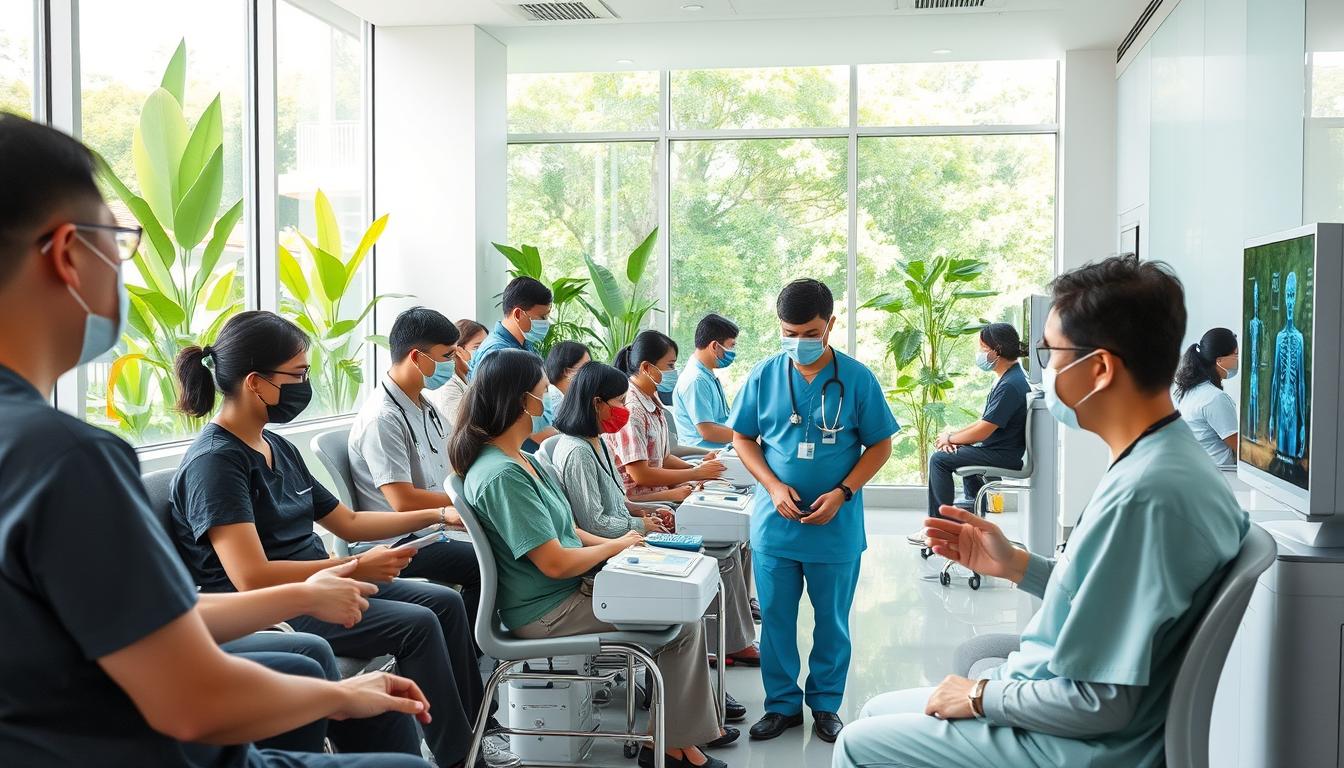
At a basic level, corporate medical screening services cover health assessments organised for employees through a clinic, at the workplace, or in some cases at home. The scope may include routine blood work, biometric checks, executive screening packages, pre-employment medicals, imaging, and early detection options based on workforce profile and company objectives.
For employers, the value is not just in the tests themselves — it comes from execution. A well-run screening program minimises downtime, keeps participant flow moving, and produces reports quickly enough for employees to act on the findings. When scheduling is difficult, queues run long, or data arrives in fragments, even a clinically sound package feels poorly managed.
The strongest providers treat screening as both a medical service and an operational process. That means the delivery model builds in appointment planning, staffing, phlebotomy capability, reporting workflows, and follow-up pathways from the start — not as afterthoughts.
Why Companies Invest in Corporate Medical Screening Services
Most employers balance several priorities at once. They want to support employee well-being, but they also need predictable logistics, dependable reporting, and programs that do not disrupt workdays more than necessary.
Screening serves different business needs depending on the organisation. For some companies, it forms part of a broader wellness strategy aimed at early detection and employee engagement. For others, it connects to occupational health requirements, role-based risk, insurance, or pre-employment clearance. Senior leadership teams may also want executive health screening that is more comprehensive and time-efficient.
No single package fits every workforce. A desk-based corporate team may prioritise cardiometabolic markers, cancer risk indicators, and convenience. A workforce with field-based or safety-sensitive roles may need more structured occupational assessments. The right provider recommends a screening model that fits the workforce — rather than pushing every company into the same template.
The Ministry of Manpower Singapore sets out occupational health and safety requirements that are relevant for employers designing role-specific screening programs, particularly for industries with higher physical or environmental risk.
The Operational Difference Between a Smooth Program and a Painful One
Many screening programs fail for ordinary reasons. Booking processes are unclear. Employees arrive in waves and wait too long. On-site setups are under-resourced. Reports take weeks. HR ends up chasing attendance records, status updates, and unanswered employee questions.
This is why operational capability deserves as much attention as the clinical menu. A provider may offer a long list of tests, but that alone does not guarantee a workable corporate program.
A reliable model includes clear pre-event planning, fast registration, efficient blood draw capability, and a participant journey that employees complete quickly. Report turnaround matters too. When results arrive within a defined timeframe through secure digital channels, employees are more likely to review them and follow through on next steps.
Why Scalability Matters for Larger Organisations
For larger organisations, scalability is a practical concern that smaller providers often underestimate. Running screenings for 50 employees is very different from coordinating hundreds across departments, shifts, or multiple dates.
Providers with established workflows and high screening volume handle these variables more reliably because they have already built for throughput, staffing consistency, and reporting at scale. An employer managing a large workforce should ask the provider directly how they handle high-volume days — and expect a specific, operational answer.
The Health Promotion Board Singapore offers guidance on workplace health programs and chronic disease prevention, which can help HR teams frame the business case for investing in a structured annual screening program.
Choosing the Right Format for Corporate Medical Screening Services
The best format depends on your workforce, available space, and internal timeline.
Clinic-based screening works well when employees can attend over several days and the company wants access to a full range of tests in a controlled medical environment. This option suits executive teams or companies that want broader diagnostic capabilities, including imaging services.
On-site screening is often the most efficient choice for employers focused on convenience and participation. It cuts travel time, makes attendance easier, and improves uptake when the organiser plans it well. The trade-off is that space, power, privacy, and flow management all need careful handling. Not every office or worksite suits a full screening setup equally well.
Home-based screening works well for senior executives, remote workers, or employees who need more flexibility. It offers strong convenience but suits selected use cases better than mass participation programs.
Some companies benefit from a hybrid model — routine screening delivered on-site for most employees, while executives or those needing imaging attend a clinic. This structure often produces the best balance between scale and clinical range.
What to Look for in a Corporate Medical Screening Provider
A corporate buyer should evaluate more than package pricing. Price matters, but so do throughput, reporting standards, and service reliability.
Start with clinical breadth. Can the provider support routine health screening, pre-employment checks, imaging, and early detection services within one system? A one-stop model reduces administrative friction because employees do not need referrals across multiple vendors for standard components.
Then look at turnaround time. A provider that returns personalised reports within a week sits in a very different category from one that leaves employees waiting with no clear timeline. Fast reporting supports engagement and makes the program more credible internally.
Experience also matters. Providers that have worked with many corporate clients understand how to plan around attendance cycles, workplace constraints, and internal communication needs. They recognise that employee screening is not just a medical appointment — it is a coordinated corporate program with reputational impact for the employer.
Digital reporting should not be a bonus feature. Secure electronic retrieval improves convenience for employees and reduces manual handling for HR teams — especially when participation volumes run high.
Finally, assess whether the provider can advise, not just execute. Companies often need guidance on package design, workforce segmentation, and appropriate screening depth. A credible provider explains what is necessary, what is optional, and where a more tailored approach makes sense.
Common Mistakes Employers Make With Corporate Medical Screening
One common mistake is choosing a package that is too broad for the workforce or too narrow to be meaningful. More tests do not always produce more value. When the package does not match employee age profile, risk factors, or business objectives, the program becomes expensive without being particularly useful.
Another mistake is underestimating logistics. On-site screening may sound straightforward, but poor planning creates bottlenecks that affect operations more than expected. Space planning, participant scheduling, fasting instructions, staffing levels, and privacy arrangements all need attention before screening day.
Some companies also focus heavily on attendance and too little on follow-through. Screening only produces value when employees receive clear results and understand what to do next. When findings arrive late or prove difficult to access, the impact of the entire program drops significantly.
The Ministry of Health Singapore recommends that working adults undergo regular health screening for chronic conditions including hypertension, diabetes, and high cholesterol — reinforcing why follow-through after screening matters as much as participation itself.
Speak to Our Corporate Screening TeamFrequently Asked Questions About Corporate Medical Screening Services
What are corporate medical screening services? Corporate medical screening services are structured health assessment programs that employers organise for their workforce. They typically cover blood tests, biometric checks, and clinical assessments designed to detect health risks early, meet occupational health requirements, and support employee well-being. Providers like HOP Medical Centre deliver these programs through clinic-based, on-site, and home-based formats depending on the company’s needs.
What should a corporate medical screening program include? A well-designed corporate medical screening program covers basic vitals, blood work for metabolic and cardiovascular markers, and any occupational or role-specific assessments the workforce requires. More comprehensive programs may add imaging, cancer marker screening, liver and kidney function, thyroid testing, and executive health packages. The right scope depends on the workforce’s age profile, risk factors, and the company’s health objectives.
How do I choose the right corporate medical screening provider in Singapore? Evaluate providers on clinical breadth, report turnaround time, operational experience, and digital reporting capability. A reliable provider handles pre-event planning, participant flow, phlebotomy, and report delivery as part of a structured service — not as separate tasks. Experience with high-volume corporate programs is a strong indicator that the provider can manage the logistics your organisation requires.
How long does a corporate medical screening session take? Most standard corporate medical screenings take between 20 and 45 minutes per participant. More comprehensive programs that include a doctor consultation, imaging, or specialist assessments may take longer. HOP Medical Centre designs participant flow specifically to minimise queuing and reduce disruption to the working day.
Can corporate medical screening be done at our office? Yes. HOP Medical Centre provides on-site corporate medical screening at the employer’s premises across Singapore. On-site programs increase participation rates by removing the need for employees to travel. They work best when the organiser plans space, privacy, staffing, and scheduling in advance to keep the process running smoothly.
What is the difference between corporate medical screening and pre-employment medical screening? Corporate medical screening covers the existing workforce and typically focuses on early detection, chronic disease prevention, and general employee well-being. Pre-employment medical screening assesses new hires before they start a role, often to confirm fitness for work or meet regulatory requirements. Some providers, including HOP Medical Centre, offer both services within the same corporate program.
How quickly do employees receive their results after corporate medical screening? Turnaround time varies by provider. HOP Medical Centre aims to return personalised digital reports promptly after screening. Faster report delivery improves employee engagement and makes it more likely that participants will act on their findings rather than set results aside.
What formats does HOP Medical Centre offer for corporate medical screening? HOP Medical Centre offers clinic-based screening at our Orchard (Palais Renaissance) and Tampines (CPF Building) locations, on-site screening at the employer’s premises across Singapore, and home-based screening for senior executives or employees who need more flexibility. Companies with large or distributed workforces can also use a hybrid model combining two or more formats.
How does corporate medical screening support occupational health requirements? Certain industries and roles in Singapore require employees to meet occupational health standards, including fitness-for-work assessments and role-specific medical clearances. A corporate medical screening provider with occupational health capabilities can structure the program to meet these requirements alongside general wellness screening, reducing the need for separate vendors or appointments.
The Right Standard for Corporate Medical Screening Services
The most effective corporate medical screening services combine three things: clinical accuracy, operational speed, and employee convenience. Remove any one of those, and the program becomes harder to justify — both to leadership and to the employees the program is meant to serve.
That is why many employers in Singapore now prefer providers that handle multiple screening formats, move participants through efficiently, and return reports on a defined timeline. In practice, these operational details shape participation rates and overall program satisfaction far more than marketing language ever will.
At HOP Medical Centre, we have built our corporate medical screening services around this standard — with clinic, on-site, and home-based options, broad preventive and occupational health capabilities, and digital reporting designed to support faster follow-up. With over 20 years of experience running corporate programs for organisations of all sizes, our team understands that a well-executed screening program should feel organised from the first planning call to the final report.
When it does, HR teams spend less time troubleshooting, employees participate more readily, and the company gains a health initiative that genuinely supports both care and productivity.
Learn more about HOP Medical Centre’s corporate health screening services or contact our team to discuss a program built around the way your organisation actually works.