
What Happens During an Executive Health Screening in Singapore? A Complete Walkthrough
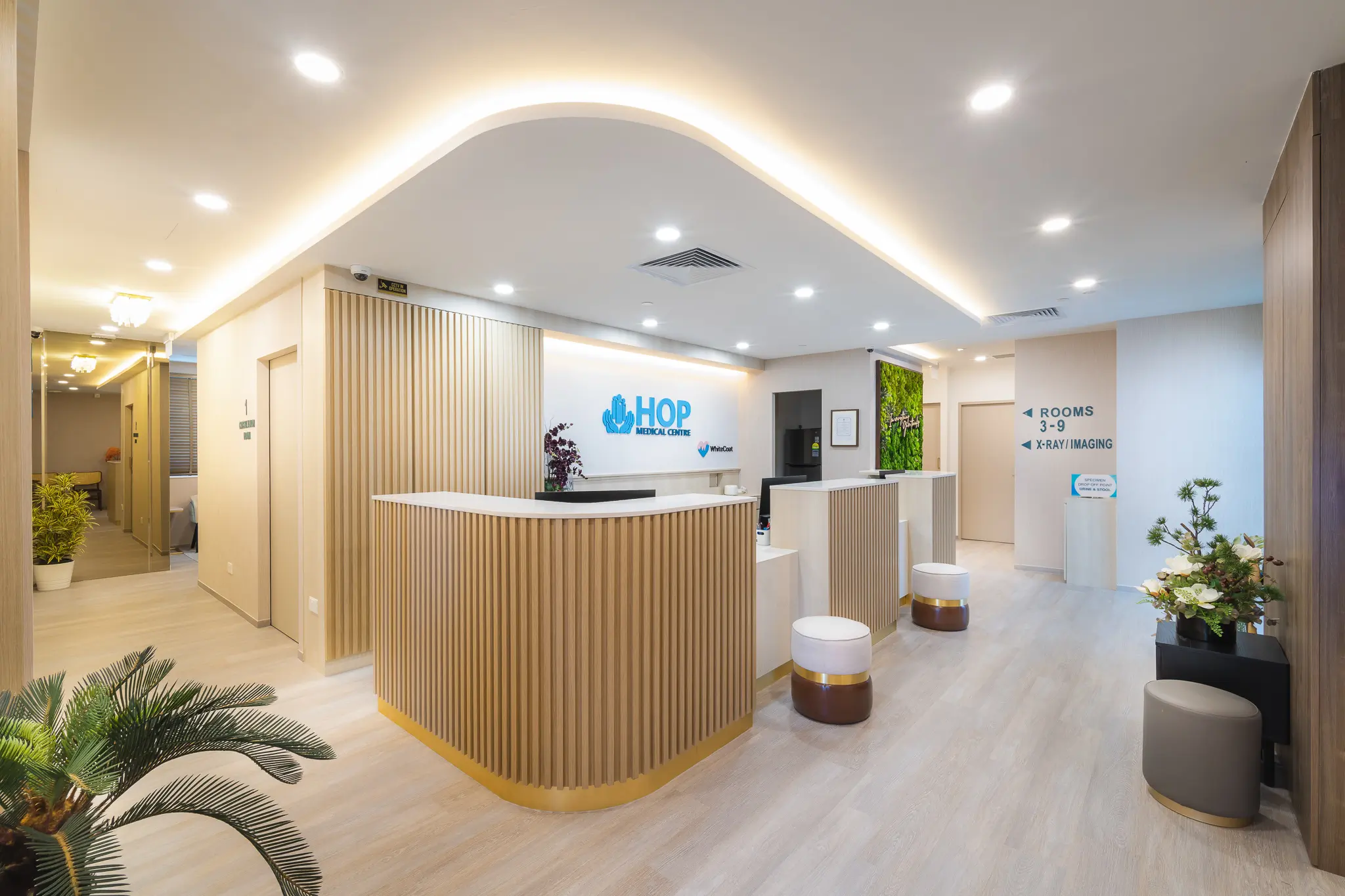
✍️ Written by: HOP Medical Centre Health Content Team ⚕️ Medically Reviewed by: HOP Senior Clinical Staff 📅 Published: March 2026 | 🔄 Last Reviewed: March 2026
⚕️ Medical Disclaimer: This article is for general informational purposes only and does not constitute medical advice. Please consult a qualified healthcare professional for personal medical guidance. Content is aligned with Singapore Ministry of Health (MOH) guidelines.
Most Singaporeans know they should go for a health screening. Far fewer know what actually happens when they get there — what tests are run, in what order, how long it takes, and what the results mean. That uncertainty is often exactly what causes people to keep putting it off.
This guide walks you through the full experience of an executive health screening in Singapore, from the moment you arrive to the moment you leave with your results — so there are no surprises on the day.
What Makes Executive Health Screening Different From Basic Screening?
Singapore’s health screening landscape broadly falls into two tiers.
Basic or subsidised screening — available through CHAS and Healthier SG — covers a defined set of essential tests: blood pressure, blood glucose, BMI, and cholesterol. These are valuable but deliberately focused on detecting the most common chronic conditions.
Executive health screening goes considerably further. A comprehensive executive package typically adds:
- Extended blood panels covering organ function, thyroid, liver, kidneys, and full haematology
- Cancer markers (CEA, AFP, PSA for men, CA-125 for women, depending on package)
- ECG (electrocardiogram) for cardiac rhythm assessment
- Chest X-ray
- Urinalysis
- Imaging — ultrasound of the abdomen and pelvis
- Physical examination and physician consultation
The goal is not just to detect existing disease, but to map your baseline health comprehensively — so that changes over time become visible before they become serious.
At HOP Medical Centre, our Executive Health Screening packages are designed to give you the clearest possible picture of your health in a single visit.
Step-by-Step: What Happens on the Day
Before You Arrive — Preparation
Most executive health screenings require 8 to 10 hours of fasting beforehand for accurate blood glucose, cholesterol, and triglyceride readings. Water and essential medication are generally permitted — your clinic will confirm this at booking.
What to bring: your NRIC or passport, any existing medical records if relevant, and a list of current medications if you are on long-term prescriptions.
Wear comfortable, loose clothing — you will need to change into a clinic gown for certain tests.
Registration and Intake (10–15 minutes)
You will complete a health history form covering family medical history, existing conditions, lifestyle factors (smoking, alcohol, exercise), and any current symptoms or concerns. This context helps your physician interpret your results accurately — it is worth completing honestly and in detail.
Biometric Measurements (10 minutes)
Your height, weight, BMI, and blood pressure are recorded. Waist circumference may also be measured — particularly relevant for assessing metabolic syndrome risk in Asian populations, where visceral fat is a key marker at lower BMI thresholds than Western guidelines suggest.
Blood Draw (5–10 minutes)
A phlebotomist collects your blood sample — typically one to three tubes depending on the tests ordered. This is the most information-dense part of the screening. Results from a comprehensive executive blood panel will cover:
| Blood Test | What It Screens For |
|---|---|
| Full blood count (FBC) | Anaemia, infection, blood disorders |
| Lipid profile | Cholesterol, LDL, HDL, triglycerides |
| Fasting blood glucose / HbA1c | Diabetes and pre-diabetes |
| Liver function (ALT, AST, GGT) | Liver health and fatty liver |
| Kidney function (creatinine, eGFR) | Renal health |
| Thyroid function (TSH) | Hypo/hyperthyroidism |
| Cancer markers | Tumour markers relevant to age and gender |
| Uric acid | Gout risk |
Reference: MOH Clinical Practice Guidelines on Screening (moh.gov.sg)
Urine Test (5 minutes)
A urine sample screens for protein, glucose, blood, and signs of kidney or urinary tract issues. Results are immediate.
ECG (5–10 minutes)
Electrodes are placed on your chest, wrists, and ankles to record your heart’s electrical activity. An ECG detects irregular rhythms, signs of previous cardiac events, and certain structural issues. It is painless and takes less than five minutes once set up.
Chest X-Ray (5 minutes)
A chest X-ray assesses your lungs and heart size. It screens for pulmonary conditions including early lung changes, and is part of standard executive packages. HOP’s Radiology and Imaging services handle all imaging in-house at both our Orchard and Tampines locations.
Abdominal Ultrasound (10–15 minutes)
A sonographer applies gel to your abdomen and uses an ultrasound probe to visualise your liver, gallbladder, pancreas, spleen, and kidneys. This picks up fatty liver, gallstones, cysts, and other structural abnormalities that blood tests alone cannot detect. No radiation is involved.
Physician Consultation (15–20 minutes)
This is the most valuable part of an executive screening and what distinguishes it from a self-service lab visit. A doctor reviews your results with you in real time — explaining what the numbers mean, flagging anything that requires follow-up, and giving you personalised guidance based on your age, history, and risk profile.
This is the moment to raise any health concerns you have been carrying around. Use it.
How Long Does an Executive Health Screening Take?
A comprehensive executive health screening typically takes 2 to 3 hours from registration to physician consultation. Some clinics split the visit — blood draw first, then a return visit for the consultation once lab results are processed.
At HOP Medical Centre’s Express Health Screening, the process is streamlined for working professionals who need results efficiently without compromising on thoroughness. Both our Orchard (Palais Renaissance) and Tampines (CPF Building) locations are easily accessible on weekdays and weekends.
What Conditions Can Executive Health Screening Detect?
A well-structured executive health screening can flag or identify:
- Diabetes and pre-diabetes — Singapore’s diabetes prevalence sits at 9.1% of adults per MOH’s 2024 survey, with many more undiagnosed in the pre-diabetic stage
- Cardiovascular disease risk — hypertension affects 33.8% of Singaporean adults, often silently
- Fatty liver disease (MASLD) — the most common chronic liver disease globally, detected through liver enzymes and ultrasound
- Thyroid dysfunction — affects roughly 1 in 20 adults and is frequently missed without a TSH blood test
- Early-stage cancers — cancer markers provide an additional layer of screening for colorectal, liver, prostate, and ovarian cancers
- Kidney disease — chronic kidney disease is often asymptomatic until significantly advanced
- Anaemia — common in women and frequently undetected without a full blood count
The Health Promotion Board (hpb.gov.sg) recommends health screening at least once every 3 years for adults aged 40 and above, and more frequently for those with existing risk factors.
How Much Does Executive Health Screening Cost in Singapore?
Costs vary depending on the scope of tests included:
| Package Type | Approximate Price Range | Typical Inclusions |
|---|---|---|
| Basic health screening | $0 – $150 | Blood pressure, glucose, cholesterol, BMI |
| Mid-range package | $200 – $450 | Full blood panel, ECG, urine, consultation |
| Executive package | $500 – $1,200+ | All of the above + imaging, cancer markers, specialist tests |
| Corporate group rates | Variable | Customised by headcount and test scope |
Subsidies are available for eligible Singapore Citizens and PRs through Healthier SG (healthiersg.gov.sg) and CHAS for basic screenings. Executive packages beyond the subsidised scope are typically paid out-of-pocket or through employer health benefits.
HOP Medical Centre offers affordable health screening packages across multiple tiers — from entry-level to comprehensive executive panels — so you can screen at the level that suits your age, risk profile, and budget.
Executive Health Screening for Corporate Teams
Many Singapore companies arrange corporate health screening as part of employee benefits programmes. This serves both an employee wellness function and a retention signal — staff who feel cared for stay longer.
HOP Medical Centre’s corporate health screening service includes:
- On-site or clinic-based screening depending on team size
- Customised packages aligned to your workforce demographics
- Group rates for companies of all sizes
- HR-friendly reporting and coordination
For HR managers and company wellness leads, our corporate wellness programmes cover health fairs, wellness talks, and bespoke employee health initiatives beyond standard screenings.
Ready to book your executive health screening?
Available at HOP Medical Centre Orchard & Tampines — weekdays and weekends.
🔬 View Packages 🏢 Corporate EnquirySources & References
- Ministry of Health Singapore — 2024 National Population Health Survey (moh.gov.sg)
- Health Promotion Board — Recommended Health Screenings (hpb.gov.sg)
- Healthier SG — Subsidised Screening Programme (healthiersg.gov.sg)
- MOH Clinical Practice Guidelines on Screening (moh.gov.sg)
- HealthHub Singapore — Understanding Health Screening (healthhub.sg)