
Ovarian Cyst Pain: What It Feels Like and When to See a Doctor

Pelvic pain can be unsettling, often leaving you to wonder about its cause and severity. While many factors can contribute to discomfort in the lower abdomen, ovarian cysts are a common concern. Understanding the nature of ovarian cyst pain is the first step toward managing your health proactively. This guide will help you recognise the symptoms, understand the potential causes of pain, and know when it is crucial to seek professional medical attention.
Why Ovarian Cysts Can Cause Pain
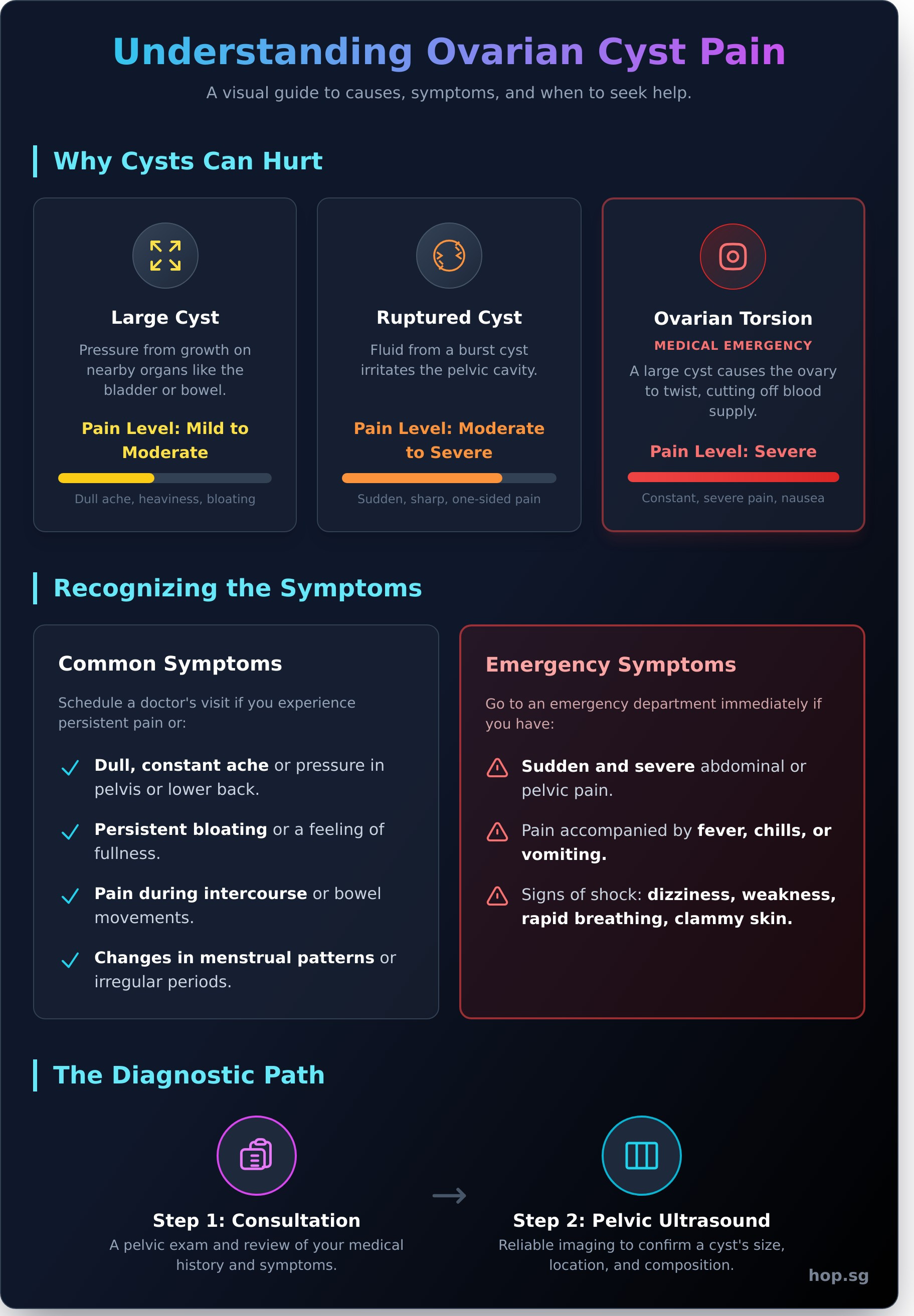
Most ovarian cysts are small, fluid-filled sacs that form on or in an ovary. They are incredibly common, and the vast majority are harmless and resolve on their own without causing any symptoms. However, pain typically occurs only under specific conditions when a cyst grows large, ruptures, or causes the ovary to twist. Learning to identify these scenarios is key to protecting your health.
Pain from a Large Cyst
As a cyst grows, it can begin to press on the ovary itself or adjacent pelvic organs, such as the bladder or bowel. This pressure often translates into a persistent, dull ache or a sensation of heaviness in the lower abdomen or pelvis. Many women also report experiencing a constant feeling of fullness or noticeable bloating that doesn’t seem to go away.
Pain from a Ruptured Cyst
Occasionally, a cyst can break open (rupture), releasing its fluid into the pelvic cavity. This can cause a sudden, sharp, and often severe pain, typically localised to one side of your lower abdomen. While the initial intense pain may subside into a dull ache after the rupture, it still requires medical evaluation to rule out complications.
Pain from Ovarian Torsion
In rare cases, a large cyst can cause the ovary to twist around its supporting tissues, an event known as ovarian torsion. This is a serious condition as it can cut off the blood supply to the ovary. The pain from torsion is typically severe, persistent, and may be accompanied by nausea and vomiting. Ovarian torsion is a medical emergency that requires immediate surgical intervention to save the ovary.
Recognising Ovarian Cyst Pain: Symptoms and Location
The specific type of pain you experience can provide important clues about its underlying cause. It is crucial for your wellbeing to be able to distinguish between mild, manageable discomfort and severe symptoms that signal a potential emergency.
Common Types of Pain and Sensations
If an ovarian cyst becomes symptomatic, you might experience one or more of the following:
- A dull, constant ache or pressure in your lower abdomen, pelvis, or lower back.
- Sharp, sudden, and intense pain, often felt on one side of the pelvis.
- Pain or discomfort during intercourse (dyspareunia) or during bowel movements.
- A persistent feeling of heaviness, pressure, or fullness in your abdomen.
When to See a Doctor for Pelvic Pain
You should schedule a doctor’s visit if you experience pelvic pain or bloating that is persistent, lasts for more than a few weeks, or represents a change from your normal cycle. It is also important to mention any associated changes in your menstrual patterns, such as irregular periods. An early and accurate diagnosis provides peace of mind and ensures you receive the appropriate care. Don’t ignore persistent symptoms. Book a health screening today.
Emergency Symptoms: When to Seek Immediate Help
Certain symptoms warrant immediate medical attention. Go to the nearest emergency department if you experience:
- Sudden and severe abdominal or pelvic pain.
- Pain that is accompanied by fever, chills, or vomiting.
- Signs of shock, which include cold and clammy skin, rapid breathing, dizziness, or weakness.
These symptoms could indicate a serious complication like ovarian torsion or a ruptured cyst with significant internal bleeding.
How Ovarian Cysts Are Diagnosed
A proper diagnosis is essential to determine the cause of your pain and map out the right course of action. A doctor will use a combination of methods to identify whether an ovarian cyst is present and if it requires treatment.
The Role of a Pelvic Exam and Medical History
The diagnostic process typically begins with a discussion of your symptoms and a review of your medical history. Following this, your doctor will perform a physical pelvic exam. During this examination, they can often feel for any swelling or masses on an ovary that might suggest the presence of a cyst.
Diagnostic Imaging: The Importance of an Ultrasound
A pelvic ultrasound is the most reliable and effective imaging test for confirming an ovarian cyst. This non-invasive procedure uses sound waves to create clear images of your uterus and ovaries. An ultrasound can accurately determine a cyst’s size, location, shape, and composition (whether it is fluid-filled or solid). This detailed information is vital for your doctor to make an informed diagnosis. Our clinics offer comprehensive in-house diagnostic services to provide you with prompt and accurate results.
Frequently Asked Questions
Does ovarian cyst pain feel like period cramps?
While both can cause pelvic discomfort, ovarian cyst pain is often more localised to one side. It can also be a sharper, more sudden pain compared to the typically dull, widespread ache of menstrual cramps. However, a persistent dull ache from a large cyst can sometimes be mistaken for period pain.
Can stress make ovarian cyst pain worse?
Stress does not directly cause or enlarge ovarian cysts, but it can heighten your perception of pain. High stress levels can make you more sensitive to physical discomfort, potentially making existing symptoms feel more intense.
How can I relieve mild ovarian cyst pain at home?
For mild, dull pain, over-the-counter pain relievers like ibuprofen may provide temporary relief. Applying a warm compress or hot water bottle to your lower abdomen can also help relax muscles and ease discomfort. However, home remedies are not a substitute for medical diagnosis, especially for new or worsening pain.
Can ovarian cysts go away on their own?
Yes, most functional ovarian cysts, which are related to the menstrual cycle, resolve on their own within one to three months. Your doctor may recommend a period of “watchful waiting,” which might include a follow-up ultrasound to ensure the cyst has disappeared.
Is pain from an ovarian cyst constant or does it come and go?
It can be both. A large cyst might cause a constant, dull ache or feeling of pressure. Sharp pain from a rupture is typically sudden and may lessen over time, while the severe pain of ovarian torsion is usually constant and progressively worsens.
Disclaimer: This article is for informational purposes only and does not constitute medical advice. Always consult with a qualified healthcare professional for any health concerns or before making any decisions related to your health or treatment.
Persistent pelvic pain should never be ignored. Taking a proactive approach to your health is the best way to ensure your long-term wellbeing. With over 20 years of trusted medical expertise in Singapore and comprehensive in-house diagnostic services, our team is equipped to provide the clarity you need. Book a Health Screening to Investigate Your Symptoms and take the first step toward peace of mind.